Spiritual Disciplines for Mission: Guru Mashup

Spiritual disciplines are supposed to be normal in Christian life. The revival of evangelical interest in them, especially since the publication of Richard Foster’s watershed Celebration of Discipline, has been of inestimable importance. Yet, because the disciplines tend to get sucked into the black hole of American self-help religion, I’m interested in highlighting a missional understanding of them.

Christian spiritual disciplines exist theologically as a dimension of soteriology (specifically, as component of the doctrine of sanctification). In missional theology, salvation is teleological—essentially for a purpose, namely, God’s ends, rather than essentially from a state of being, such as guilt or sinfulness. Whereas many Christians treat spiritual disciplines (e.g., daily “quite time”) as a way of becoming spiritual (which betokens an ontological fixation on being something per se), or at least as a way of measuring “spirituality” as a kind of abstract quantity, a missional conception of the disciplines understands them as practical lifestyle choice for the sake of mission.

The ontological fixation on becoming spiritual might assume that spirituality has a causal relationship to mission (and perhaps this is near the truth), but in practice it treats participation in God’s mission at best as an eventual consequence rather than the purpose for which the Spirit forms God’s people. If this causal fallacy looks like the Reformation understanding of the relationship between “grace and works,” it is because fear of works righteousness is often the theological framework of Protestant theology. Within this framework, the discussion about spiritual disciplines is fundamentally a discussion about the slippery slope of works righteousness. I suspect, therefore, that the evangelical struggle to practice spiritual disciplines is deeply rooted in a psychological conflict.

The Protestant theology of grace and works is built upon a presuppositional commitment to both the inherent (ontological) sinfulness of humankind and its inability to change that condition. Yet, the practice of spiritual disciplines is ostensibly what humans do in order to become spiritual instead of sinful. Even though, in such theology, discipline follows an ontological change from guilty to forgiven by grace through faith, that imputation does not change the nature of the person forgiven. Thus, the Protestant is ontologically simul justus et peccator. Cognitive dissonance is therefore often unavoidable for Protestants who practice the disciplines.

On one hand, many feel that the disciplines are indeed righteous works, and because humans are by nature incapable of their own righteousness, they are therefore incapable of spiritual disciplines. When Protestants fail repeatedly to read their Bible daily or pray consistently, they can fall into a vicious, often unconscious cycle of reasoning: “Failure at spiritual practices proves I am sinful by nature; because I am sinful by nature, I will fail at spiritual practices.”

On the other hand, to succeed at the practice of spiritual disciplines, to become a spiritual person, would undermine the foundational ontological claim about sinful human nature. To become, through spiritual disciplines, simul justus et sanctus would put the need for grace in question. If humans are capable of doing practices that result in sanctification, doesn’t that mean the premise of salvation by grace alone is flawed? This is, of course, a question that lacks nuance, but that is the nature of most cognitive dissonance. I merely wish to point out the apparent conflict. As a Protestant, not only am I theoretically incapable of doing spiritual disciplines insofar as they are truly spiritual and I am truly sinful, but to become is not tenable in the first place for a theology built upon an ontological claim.

This must remain a suspicion, of course, but I believe it is difficult for many Protestants to engage actively in practices that lead to sanctification without feeling the psychological rumbles of friction in their theological substructure. Authors are, in fact, often at pains to reassure readers that the disciplines are nothing more than a means of grace. Foster is a good example:

God has given us the Disciplines of the spiritual life as a means of receiving his grace. The Disciplines allow us to place ourselves before God so that he can transform us.

The apostle Paul says, “he who sows to his own flesh will from the flesh reap corruption; but he who sows to the Spirit will from the Spirit reap eternal life” (Gal. 6: 8). Paul’s analogy is instructive. A farmer is helpless to grow grain; all he can do is provide the right conditions for the growing of grain. He cultivates the ground, he plants the seed, he waters the plants, and then the natural forces of the earth take over and up comes the grain. This is the way it is with the Spiritual Disciplines—they are a way of sowing to the Spirit. The Disciplines are God’s way of getting us into the ground; they put us where he can work within us and transform us. By themselves the Spiritual Disciplines can do nothing; they can only get us to the place where something can be done. They are God’s means of grace. The inner righteousness we seek is not something that is poured on our heads. God has ordained the Disciplines of the spiritual life as the means by which we place ourselves where he can bless us. [1. Richard J. Foster, Celebration of Discipline: The Path to Spiritual Growth, Kindle ed. (New York: HarperCollins, 2009), 7.]

I have no objection to this description. By all means, let’s understand the disciplines within a robust theology of grace. I have used Foster over the years to define the disciplines in this way and also to clarify what the disciplines are not[4. Adapted from Foster, 8–10.]:

  • They are not antinomianism: trust in the absence of human effort.
  • They are not moralism: trust in one’s own efforts to achieve one’s own righteousness.
  • They are not legalism: trust in external norms.

The categories are Foster’s, but the definitions are mine. I find trust (faith) to be the most helpful way of juxtaposing these negative points of reference with the disciplines as acts of dependence on God’s grace through Christ by the power of the Spirit. Foster characterizes antinomianism and moralism as chasms to either side of a narrow path—which is probably the most unhealthy aspect of his work on disciplines. Then he devotes a whole section to legalism, which he terms externalism. (While I share a concern about legalism, it is precisely here that Willard is the best compliment to Foster, for he is far less preoccupied about law and therefore more able to deal with disciplines as nonnegotiable practices of transformative action in and for the world, more on which below). I prefer to stick with legalism, though my definition is a tip of the hat to Foster’s vision of externality. These definitions in view, I hope it’s clear that I’m in favor of a grace-oriented vision of the disciplines.

Yet, I want to ask what happens to our understanding of the disciplines when we step onto a different theological foundation than fear of works righteousness. What happens when the story of God’s mission is our theological foundation, and that story includes a significant plot line about our capacity and responsibility to collaborate, not so that we may attain inner righteousness or merely be blessed but so that we may do justice and become a blessing–so that we may become conduits of grace rather than receptacles? For one thing, the cognitive dissonance dissipates. Furthermore, the urgency of practicing spiritual disciplines increases in proportion to our missional calling. The disciplines become a tangible means of preparation for participation in God’s mission and a concrete avenue for loving one’s neighbor (and spouse, children, friends, and colleagues). This is how we become what we should be, not as an ontological concern but as a missiological one, as participants. For the spiritual disciplines are the church’s tried and true practices of the imitatio Cristi, insofar as we imitate the Holy and Sent One. Dallas Willard puts it this way:

I want to inspire Christianity today to remove the disciplines from the category of historical curiosities and place them at the center of the new life in Christ. Only when we do, can Christ’s community take its stand at the present point of history. Our local assemblies must become academies of life as it was meant to be. From such places there can go forth a people equipped in character and power to judge or guide the earth.

Multitudes are now turning to Christ in all parts of the world. How unbearably tragic it would be, though, if the millions of Asia, South America and Africa were led to believe that the best we can hope for from The Way of Christ is the level of Christianity visible in Europe and America today, a level that has left us tottering on the edge of world destruction. The world can no longer be left to mere diplomats, politicians, and business leaders. They have done the best they could, no doubt. But this is an age for spiritual heroes—a time for men and women to be heroic in faith and in spiritual character and power. The greatest danger to the Christian church today is that of pitching its message too low.

Holiness and devotion must now come forth from the closet and the chapel to possess the street and the factory, the schoolroom and boardroom, the scientific laboratory and the governmental office. Instead of a select few making religion their life, with the power and inspiration realized through the spiritual disciplines, all of us can make our daily lives and vocations be “the house of God and the gate of heaven.” [5.Dallas Willard, The Spirit of the Disciplines: Understanding How God Changes Lives, Kindle ed. (New York: HarperCollins, 2009), “Preface.”]

When Everything Is Mission

One of the most quoted critiques of missional theology is: “If everything is mission, then nothing is mission.”[6. Stephen Neill, Creative Tension (London: Edinburgh House Press, 1959), 81.] To this I say: bollocks. If everything is mission, then the church is the church. And when local churches realize that everything is mission, the meaning of the spiritual disciplines come into focus.

John Ortberg makes a helpful point about the way Christians often see spiritual disciplines:

Too often people think about their “spiritual lives” as just one more aspect of their existence, alongside and largely separate from their “financial lives” or their “vocational lives.” Periodically they may try to “get their spiritual lives together” by praying more regularly or trying to master another spiritual discipline. It is the religious equivalent of going on a diet or trying to stick to a budget.

The truth is that the term spiritual life is simply a way of referring to one’s life—every moment and facet of it—from God’s perspective. Another way of saying it is this: God is not interested in your “spiritual life.” God is just interested in your life. [5. John Ortberg, The Life You’ve Always Wanted: Spiritual Disciplines for Ordinary People, Kindle ed. (Grand Rapids: Zondervan, 2002), 15.]

Ortberg is trying to convince readers that all of life is spiritual, and I appreciate his tack. It’s no good trying to relegate spiritual formation to one corner. The trick, however, is to grasp that every dimension of life is caught up in God’s mission and then to see that the disciplines are about how we participate. When everything is mission, and spiritual disciplines are for mission, there is nothing they don’t touch.

What Ortberg puts his finger on, and what motivates the denial that everything is mission, is the dualism deeply ingrained in Western culture. It is so pervasive that it’s necessary to address those who are now skeptical about spiritual disciplines because they appear to be escapist and out of touch with real work in the world. Marjorie Thompson argues the point incisively:

The Christian spiritual life, modeled in Jesus, is thoroughly incarnate. It represents a complete unity of spiritual and physical life, including deep feeling, enjoyment of the created order, concern for the welfare of the city, and compassion for all people. Our “journey into Christ” is the lifelong process that our tradition has called sanctification— growth in holiness. But holiness is not some ephemeral, antiseptic state separated from family, work, or life as a public citizen. It is absolutely practical and concrete. Holy people (saints) get into the dirt and sweat of real life, where light and darkness contend with real consequences. This is where God is at work. If the Word I hear Sunday morning or during my private prayer has no bearing on the way I relate to family, friend, and foe or how I make decisions, spend my resources, and cast my vote, then my faith is fantasy.

The Spirit insists on transforming us at every level: personal, social, economic, and political. God is Lord of the whole of our lives. When we think of categories such as prayer and service, contemplation and action, individual and community as opposites, we create false and unnecessary divisions. Nurturing the inner life and addressing social realities are both important aspects of the Christian spiritual life. One is not more “spiritual” than the other, but either by itself is less than a full embodiment of the life we are called to in Christ.

. . . It is deeply damaging to the church and its members to suppose that we can transform the world if we are unwilling to be transformed personally.[6. Marjorie J. Thompson, Soul Feast: An Invitation to the Christian Spiritual Life, Kindle rev. ed. (Louisville: Westminster John Knox, 2014), locs. 663–76.]

Holiness, as she says, is practically about getting involved “where God is at work”—to my ears, a clear reprise of missio Dei theology. The disciplines are finally about our capacity[7. It is common to refer to the idea of the capax Dei in the discussion of spiritual disciplines. Augustine states in De Trinitate 14.8.11: “For, as we have said, although worn out and defaced by losing the participation of God, yet the image of God still remains. For it is His image in this very point, that it is capable of Him, and can be partaker of Him; which so great good is only made possible by its being His image.” The idea of participation stands out in connection with the human capacity for God.] as God’s transformative agents, since we cannot transform the world “if we are unwilling to be transformed personally.” In other words, what is at stake in our personal transformation is not our personal transformation but the world’s.

What, then, are the spiritual disciplines?

  • Intentional, habitual activities that compose the medium used by the Holy Spirit to transform human life into the image of Jesus.
  • The lifestyle of Jesus that allowed him “to receive his Father’s constant and effective support while doing his will.”[7. Willard, 9.]
  • “Realistic methods of human transformation” through a “constant interaction with the Kingdom of God as a real part of our daily lives, an ongoing spiritual presence that is at the same time a psychological reality.”[8. Willard, “Preface.”]

How are the disciplines related to mission?

  • They are part of the good news about new life. We have an actual, practicable lifestyle that constitutes new life. To live like Jesus is not an impossible demand but a gift that God’s people can share with every seeker.
  • They are the church’s preparation for participation in mission. By them we increase our capacity for collaboration in God’s work through and beyond us.
  • They are the substance of discipleship. It is no etymological trick to point out that a disciple is one who is disciplined. The spiritual disciplines are the way of Jesus in which his followers walk. If mission entails making disciples, it entails modeling and teaching spiritual disciplines.


Notes

On Drinking, Cussing, and Nudity (or Being a Christian at Bonnaroo)

I trashed this article in its original form. I worked on it for a while but couldn’t put my finger on a clear idea. I considered publishing rambling thoughts on my Bonnaroo experience, but I ultimately killed it in deference to cogent argumentation. Then someone sent me a bulletin from a Church of Christ in Manchester, TN, where Bonnaroo takes place. It brought the clarity I needed. I’m not really in conversation with the bulletin article, but it exemplifies the disposition that prompted me to write on being a Christian at Bonnaroo in the first place.

There is confusion about what is at stake in this conversation, because two separate issues often become jumbled. One is whether traditional conceptions of morality are defensible. This is a conversation about both culture and biblical interpretation. Drinking alcohol obviously means something different now than it did after the temperance movements of the nineteenth century. Women’s bare legs mean something different now than they once did. And so on. Consequently, the biblical understandings of such practices vary with their cultural meanings. The other issue is how Christians who understand themselves missionally should relate to people whose morality is not Christian. This is a conversation about both culture and mission. “The culture” can be mistaken for a description of non-Christian lifestyles, which surrenders the positive dimensions of culture and ultimately leaves the church with no ecclesiology but a self-ghettoizing, sectarian one that cannot serve God’s mission. It is foolish in the first place to reject a good thing on the grounds that people with different values make use of it, or even abuse it. But it is untenable theologically because the ground of the church’s meaningful relationship with others is shared culture—what we refer to missiologically as identification.

In other words, it’s one thing to say that much of what goes on at Bonnaroo isn’t the big moral deal that traditional churches think it is. It’s another thing to say that Christians should share as much of the culture of Bonnaroo as possible for the sake of the kingdom. The two get muddled because the church typically makes drinking, cussing, and promiscuity such a big hairy deal that the thought of being where those things happen is simply untenable. There is no way to share that cultural space; retreat and condemnation is the only option. Missionally oriented people sense, therefore, that in order to argue that we should engage (enjoy, critique, and transform) that cultural space as God’s people, it is necessary to diminish the intensity of the reaction against its perceived immorality.

I love music, and I’m a Mumford and Sons fanboy. So I was all in for Bonnaroo this year. I did not attend in order to convert people. I went for music and friendship. Yet my faith is in the God who has called the church into his mission, which is not a vocation that can be put on hold. If I am capable of saying I didn’t go to Bonnaroo in order to convert people, I have to add that I went conscious of the implications of my presence for a larger endeavor to understand what Christian mission means in the midst of American culture. Yes, I admit, I’m incapable of being at a music and arts festival without experiencing the music and arts in relation to God’s redemptive purposes. Yet, in light of my foregoing distinction, I have to state that this is not an argument for the validity of choosing to be in the middle of a whole lot of immorality. It is merely a statement about the impossibility of my being at Bonnaroo without missional implications in my own mind, even when—no, especially when—my primary purpose is not to preach or proselytize but to share the experience of art with people who are actively making choices I would not make.

The decision to place myself in the middle of a whole lot of immorality was a different matter, but, as I hope my initial paragraphs explain, not an unrelated one given my religious context in a town adjacent to the Bonnaroo staging grounds. Regarding this decision, I will explain five assertions: (1) drinking, cussing, and nudity are not even a very big deal, much less moral leprosy; (2) immoral behavior is still a serious concern; (3) hypocrisy has nothing to do with it; (4) behavior cannot be the church’s primary concern; and (5) missional churches must renegotiate their cultural engagement accordingly.

1. Many churches need to stop acting like alcohol, salty language, and naked bodies are contagious diseases.

Being scandalized by such things and avoiding them like the plague may be a healthy personal reaction for some people at certain points in their lives, for their own good. But when rejection becomes our reaction to people who do not know Christ, or when we act like everyone ought to know better and therefore attempt to shame and shun them, it is clear that such a disposition is not properly the church’s. Furthermore, shaming and shunning definitely haven’t proved useful in keeping people from insobriety, hateful speech, and sexual self-destruction, even our own people.

But beyond the inappropriateness and ineffectiveness of these reactions, I doubt their triggers are even a major concern. There are lots of risqué behaviors at Bonnaroo. Course language, scantily clad bodies, and the legality of pot are the kinds of surface issues that admittedly set off my puritanically programed moral alarm. But they don’t really make a whole lot of moral difference at the end of the day. Many bands at Bonnaroo were incapable of making it through a sentence between songs without dropping an F-bomb for emphasis. That is apparently the word’s function in typical discourse at this point. In fact, as I worked at the general store in Bonnaroo, I noticed that many people didn’t check out without a few obscenities spicing up their language, never once hatefully (as a curse) or even angrily (as an expletive). In fact, it’s hardly right to call them obscenities in such usage. There is no shock value intended or perceived in such discourse. As I said, the F-bomb still manages to create emphasis, but there was no sense of attack (as in “F you”) or sexual connotation (I’ll forgo the example sentence). Much like a teenager texting “WTF,” most people use the word in a virtually harmless way.

For comic relief, I’ll share my favorite story from working in the general store. Ms. Anne was working the cash register for us, and she was a no nonsense kind of lady—just who you want manning your till. It happened that we were price gouging on cigarettes. A customer asked how much a pack cost and Ms. Anne said, “Twenty-one dollars plus tax.” The response of shock, which we witnessed every time a poor nicotine addict darkened our doorway, was in this particular case, “Are you F—ing with me?!” Ms. Anne simply, sincerely replied, “I wouldn’t do that to you.” And I died laughing. It was the perfect response. Not offense or scandal but a friendly rejoinder that subtly suggested the question was ill conceived. The problem with language these days is often not vulgarity or malediction but thoughtlessness. Our reaction need not be to turn red and hide the children.

Perhaps this makes a little more sense to me because I’m from Texas church people that never set aside certain useful words.Where I grew up, one got off one’s ass to do work, and hopefully did a hell of a job. Then again, I’ve found that people in Tennessee also speak with salt when they’re comfortable no one minds. As someone near to me recently said, “Cow shit is cow shit. Other words just don’t quite capture it.” Perhaps a great many of us are just pretending like we find such words offensive when in fact, most of us already know those words do no harm in common use. And harm is, theologically, what is at stake in our speech. Can the words I’ve mentioned be harmful? Obviously. Are there other words that are almost exclusively harmful. Sure. But I didn’t hear any such usage at Bonnaroo. So let’s not act like a great moral question is at stake in listening to bands with astonishingly limited vocabularies.

As for alcohol, my experience has also been that, in the privacy of the home, many Christians carefully probe to see whether Meg and I drink and then happily bring out the vino or beer when they discover we’re not teetotalers. Again, it seems we are all acting like we abstain when in fact most of us choose to exercise moderation. Of course, I know people who get panicked or judgmental around alcohol. Whatever the cause of this, it is not a biblical disposition, and neither drinking nor being around people drinking is of moral consequence per se. Considering Bonnaroo, perhaps the question is whether to go where people are out to get drunk, or whether drinking with such people somehow contributes to their behavior. Maybe it could, in as much as eating with gluttons contributes to their gluttony—and I’ve been to a lot of church potlucks. No, it is probably more reasonable to consider the effects of modeling moderation in comparison with the effects of social exclusion. The former is not a possibility if we treat social drinking like a big moral deal. It’s not. Let’s get over it.

Finally, the most difficult of the three moral triggers I’ve listed: nudity. Maybe we could warm up to the subject by pointing out that most women at Bonnaroo wear bikinis, so the question is: what is the moral significance of going to the beach? If you are a sexually lustful person, then the moral significance is considerable. But that does clarify the fact that the moral consideration is primarily desire, not attire. In most other circumstances, we wouldn’t rightly blame a woman for a man’s lust (though I realize this does happen in some ridiculous Christian discussions).

Yet, I suspect that what would put many people over the edge is the women who go topless at Bonnaroo. It becomes harder to argue the beach analogy and easier to suggest these women seek to cause sexual desire. For the sake of argument, then, let’s assume that not only the topless women but also all the bikini-clad women were intending to provoke sexual attraction in others. In that case, the question is something like: what is the moral significance of going to the strip club? I would find that to be a very foolish destination for most Christians. But here we have a good example of the need to turn down the intensity of our reaction.

We aren’t shocked that people spend their lives looking for human connection, that sexuality is one of the essential ways we connect, or that people will market and sell the hope of that connection for a profit. We may find the people who live for that hope to be in great need of Jesus, but we don’t have any reason to react to them as though they are doing anything particularly surprising or disgusting. Our expectations are realistic. As Paul writes to the Corinthians, “I wrote to you in my letter not to associate with sexually immoral persons—not at all meaning the immoral of this world, or the greedy and robbers, or idolaters, since you would then need to go out of the world” (1 Cor 5:9–10). Of course we associate with sexually immoral people, and of course we don’t expect them to live according to Christian morality. There are places we needn’t go for the sake of those associations; fair enough. Even so, we need to evaluate such places and such behavior in a less reactionary way. Admitting that I’ve never been to a strip club, I’ll still claim that my experience of Bonnaroo was not of an environment designed to induce lust. The few women running around topless were not being pimped or using their bodies for money. They were probably very promiscuous elsewhere, and I hear some parts of the campgrounds were a bacchanal, but that was not what the music festival proper involved. If we can manage to be less reactionary about places like strip clubs, how much more so about being at a music festival where partial nudity makes an occasional appearance?

In total, I consider these triggers of moral outrage among traditional Christians to be far less morally significant than our reactions have suggested. I have picked them because they are essentially what one encounters at Bonnaroo, and they are typically the cause of much consternation among Christians. Having been raised in conservative Southern churches, I still found the experience of them to be relatively uncomfortable, so I don’t want to come across as insensitive to Christians who can’t help but feel shock. But in terms of my conscience, I found the price gouging and the questionable bookkeeping practices of the general store to be far more outrageous. Beer, cussing, and promiscuity simply don’t justify the conclusion that “I shouldn’t be associating with these people.” And I must emphasize that association with people is the issue, not abstractly being in a certain place. If I had rented a kiosk in order to pass out evangelistic literature, I doubt many conservative Christians would object to my “being there.” The rub is when I’m there in order to associate with people—simply share art with people—who are openly expressing a non-Christian morality. It is this scenario that prompts me to say, let’s calm down and consider what is really at stake morally rather than jumping to quote Bible verses that don’t actually speak to the question at hand (at least, not as mere recitations).

2. Immoral behavior is still a serious concern.

I’m not saying that big moral deals don’t exist. I’m saying (1) that the behaviors mentioned don’t qualify and that (2) our reaction to serious moral concerns (when we actually recognize them) betrays an even more serious misunderstanding of the church’s relationship to the world. Our calling is not to decry and reject immorality in the world but to live differently among the world, in loving relationship to the world, affirming its created goodness where we find it, and of course, wisely making our case for trusting Jesus’s way. I’m capable of moral outrage, and there are undoubtedly moments when that is the appropriate reaction (I’m thinking of genocide, oppression of the poor, rape). But we seem to have made outrage and rejection our only means of communicating our moral standards. Can’t we feel that indiscriminate hookups and willful insobriety are serious moral issues but communicate God’s concern in more fruitful, Christlike ways than condemning and rejecting the people who make those choices? It seems obviously possible, and I find the decision to segregate myself from moral others to be ultimately useless, having no bearing whatsoever on my estimation of the gravity of their decisions, and having an adverse effect on the communication of an alternative. Serious does not mean stand at a distance and disapprove. And choosing to be in the presence of bad decisions does not mean they aren’t serious.

This final point may be the key, because many Christians seem to think that being at Bonnaroo (to stick with our example) communicates approval of or “condones” every behavior that goes on there. This strikes me as a seriously dumb idea (and serious dumbness should probably be a moral concern), but it has been so prevalent in my Christian contexts that it deserves attention. Why would associating with people communicate approval of their morality? That’s certainly not the story we live by: Jesus’s association with notorious sinners didn’t communicate his approval. Is there really any risk of people concluding that Christians suddenly approve of premarital affairs, or that we think it’s not a serious moral issue? Or for that matter, is there really any risk that people would think companionship amounts to a moral position?

Perhaps so: perhaps we think that a person won’t be friends with someone who does what they consider to be wrong. I suspect, however, that this thought is a product of our ostracizing habit rather than its rationale. Church people definitely act as though they can’t be around those with whom they disagree. The way we let it be known we disagree with an interpretive conclusion in the church is to leave. The analogy with personal relationships is fairly straightforward: the way we let non-Christians know we disapprove of their actions is to treat those actions as a moral position and separate ourselves from them. Yet, we’re relatively aware that division is an unhealthy and unbiblical way of dealing with church conflict, and I don’t believe many Christians are under the impression that working through conflict instead of splitting is about reaching unanimity. We reject and abandon people, inside and outside the church, because we are relationally broken and bad at reconciliation. The claim that association with those of a different understanding, whether doctrinal or moral, somehow condones their position is a hollow justification of a relational failure.

The fact is, I am friends with many people whose morality is different than my own, and I have never once experienced confusion about the meaning of that friendship. How much less, then, does simply being present at an event communicate approval of everything that happens there? I deem the idea absurd.

Bonnaroo is host to some serious moral failings according to my understanding of God’s will. Neither shunning people nor avoiding places are correlates of the seriousness of those moral failings.

3. Hypocrisy has nothing to do with it.

I almost deleted this point, since it doesn’t add much to the overall argument. But I loath the misuse of hypocrite, which is so commonplace as to have virtually redefined the word in Christian usage. So I’ll take the opportunity for a short digression. Hypocrites are people who pretend. It is not pretense to fall short of one’s own moral standard—only to pretend that one does not. And it is not pretense to believe going to Bonnaroo is okay while worshiping God with people who don’t. That’s called a difference of opinion. Can we, at the very least, learn the meaning of the words we use?

4. Behavior cannot be the church’s primary concern.

There is a lot of darkness present at Bonnaroo. Because I’m sensitive to the way Christianity has typically addressed those who do not share its values, and my intention is not to be harsh, Mumford’s words come to mind: “Darkness is a harsh term don’t you think? And yet it dominates the things I see.” Much as I might wish to focus on the good things that we can appreciate together at Bonnaroo, I can’t pretend that I didn’t see what I saw, which was misplaced hope and destructiveness. While immoral behaviors matter, their sum is not equal to the darkness I observed. One thing that Christians generally need to realize is that the presence of such behaviors is only as meaningful as their absence; if we admit that abstinence from a sinful behavior can be unreflective of the state of a person’s heart, then it is fair to entertain the notion that indulgence in such behavior is equally as superficial a consideration.

I hasten to add a few clarifications. One, I’m not saying, “What matters is that your heart’s in the right place.” That is one of the most deceptive slogans in modern Christianity. If we’re sticking with the spatial metaphor, what matters is where you choose to place your heart through your actions. Or, in Jesus’s words, “Your heart will be where you put your treasure.” The opposite is not true; you can’t put your treasure wherever you want and then make a claim about your heart being “in the right place.” Two, I’m not saying that behavior is superficial because there is a more important (or more real) “spiritual” reality. There is no spirit-body disconnect that justifies disregard for bodily actions. Three, I’m not saying that traditional moral mores don’t “matter to God”—only that there may be more important matters when we evaluate what is happening in situations like Bonnaroo. Darkness needs light, but we tend to act as though behaviors need prohibition, or worse, that condemning behaviors is light.

The church’s primary concern is not “the unfruitful works of darkness” (Eph 5:11). By all means, let’s take no part in them. Let’s “be careful how we live, not as unwise people but as wise, making the most of the time, because the days are evil.” Let’s “not be foolish, but understand what the will of the Lord is” (Eph 5:15–17). Yes. But let’s realize that deeds are the fruit of light or darkness; light and darkness are the root issue. Instead of getting hung up on the fruit that grows naturally from darkness, we need to realize that darkness is only transformed by light, not condemnation or prohibition. If there’s anything we need to take more seriously, it is the darkness in which Christ, the light of the world, shines only through us. If we take Paul to mean, “Avoid people who act badly. Don’t get their shame on you. Watch out for the slippery slope!” then we are left with no way to address darkness except from a distance. In that case, all we can do is reject the fruit of darkness; transforming the darkness itself by shining light in the midst of it—making Christ known—is a foregone possibility. If that is not what Paul means, then we have in Eph 5 and elsewhere an exhortation to be transformed people, which must stand alongside our commission to be agents of light in the midst of a dark world.

Once we realize that the process of shining light into darkness doesn’t happen from a distance, the question of our presence at places like Bonnaroo is implicitly answered, at least in principle (particular discretion notwithstanding). There is no initial assumption that we will separate ourselves socially from others, only that we will be rooted in “the light of the gospel of the glory of Christ” (2 Cor 4:4). If we are clear about the dynamics of darkness and light at work all around us—and we need this clarity in every situation, not just at music festivals—the specific behaviors we encounter are of far less interest. They are symptomatic at most.

5. Missional churches must renegotiate their cultural engagement accordingly.

All this said, we come to the question of culture at Bonnaroo. I went primarily for the music (though the craft beer tent was a bonus). Freed from the need to react with rejection and condemnation, Christians have the option of exploring the creativity and goodness that also exists in the places we have so often avoided. What happens when more and more Christians occupy that space, simply to say, “Yes, we recognize this creativity, and it is a gift of God!”? What happens when more of us stand in that space with moderation, extending friendship and mutual appreciation for those who marvel at beauty and long for meaning? Some might say I am naive, that most people just want to party. I thought the same thing at first glance. But after standing in those concerts, I recognized what so many around me were doing: stretching for an experience that the music almost provides, that the drugs almost simulate, worshiping the created as we so often do, in the hope that it will give back something that it cannot for all its beauty. There is indeed beauty and hope amid the darkness. The church must learn how to be present once again, so that light can allow us to see the culture for what it is and engage it accordingly. Christ is already there ahead of us. Will we go and meet him, or will we fear the dark?

On Hermeneutics and Ethics

I’m not an ethicist, more’s the pity. But as a missionary, I found it necessary to teach from ignorance, act from weakness, and generally be sent on the basis of inadequacy. “Who is sufficient for these things?” Paul asks. Fool that I am, I once thought the question was an invitation to reflect on whether or not I’m equal to the task. After a few years of mission work, I now read between the lines and hear Paul’s gentle interpretive guidance (or perhaps the Holy Spirit illuminating my heart): “It’s a rhetorical question, idiot.” Obvious, in retrospect. “Our competence is from God.” But there’s no accounting for idiocy. I digress. In Peru, I found it necessary to teach church leaders—and anyone else willing to invest the time—about ethics. So I’m a dabbler, an ethical dilettante. But in the course of my dabbling, I found that, for Christians, hermeneutics and ethics are tightly interwoven. The way I’ve been exploring that warp and woof is what this post is about.

Transformative Hermeneutics and Virtue Ethics

The structure of the curriculum I designed for theological education in Peru was a progression from two sections (OT and NT) designed to explore the biblical narrative of God’s mission, to a third section designed to explore how we make decisions from within that ongoing narrative, to a final section on the social embodiment of God’s mission as a community. The first two sections explicitly dealt with the role narrative plays in human worldviews and, therefore, the way the assimilation of the biblical story as story can transform our worldview. Each class of students struggled for six months to capture a vision of the whole narrative arc, with God’s mission as the plot. Then we began to ask, If we see the world in this way, what does X look like? This was the section devoted to ethics. We looked at a pretty typical array of issues, but always from our narrative biblical lens—meaning the fuzzy line between a narrative biblical hermeneutic and an approach to contemporary ethics was plainly in view at this point. Were we doing biblical interpretation that yielded “meaning” relevant for contemporary issues, or were we doing Christian ethics; or what is the difference?

I encouraged students to understand ethics as broader than hermeneutics. For Christians there is no ethics without biblical hermeneutics, because Scripture is our primary ethical norm. Ethics is a conversation (study) about how we decide what is good and bad. Hermeneutics is a conversation (study) about how texts function for readers. Obviously, a text can be relevant to how we decide what is good and bad, but the ways that people actually decide what is good and bad—even the most biblicist of people—are always more involved than mere textual interpretation. Therefore, hermeneutics informs a process of discernment that inevitably takes place, beyond the scope of what might fairly be considered textual interpretation (i.e., other norms also play a part in this process). This process of discernment is, I believe, the purview of ethics.

In my understanding, however, the relationship between biblical hermeneutics and ethics is not linear; ethics does not take place outside the effects of the text on the discerning community. This is especially the case for a narrative hermeneutic that functions to transform the reader’s worldview rather than provide normative grist for the ethical mill. The latter is indeed relatively linear and leads to an artificial separation between interpretive conclusions (“meaning”) and ethical determinations (“application”), which often undermines the best contributions of both hermeneutics and ethics. Worldview transformation, though, is akin to what is known as virtue ethics. The idea, simply stated, is that the formation of virtue or character in those who discern ethically is vital for the proper determination of good; a theory or process of reasoning alone is insufficient. A hermeneutic that functions informatively can only feed a theory or process of reasoning, but a hermeneutic that functions transformatively can be the essential ingredient in an ethic built upon the formation of a virtuous discerning community, and a hermeneutic that functions to transform worldviews may provide a more comprehensive—more effective—foundation than the virtue that some ethicists have in mind. For Christians, then, there may be very little difference between a hermeneutic of worldview transformation, which creates a people capable of contextually embodying an ongoing narrative trajectory, and an ethics of virtue formation, which relies upon (at the least) core dimensions of worldview to make practical moral decisions in particular contexts. There is certainly significant overlap between them, and it may be difficult to tell when one has stopped and the other begun.

Searching for conversation partners, I turned to Ismael Garcia, Introducción a la Etica Cristiana (Abingdon, 2003) and the Spanish translation of Glen H. Stassen and David P. Gushee, Kingdom Ethics: Following Jesus in Contemporary Context (IVP Academic, 2003), neither of which I had read. These are both excellent resources, and Stassen and Gushee are onto an agenda very similar to mine. Though they do not spell it out in terms of “worldview” per se, their biblically centered take on virtue ethics broadens to a concern with the transformation of “holistic character, which includes the virtues.”[1.Glen H. Stassen and David P. Gushee, Kingdom Ethics: Following Jesus in Contemporary Context (Downers Grove: IVP Academic, 2003): 60.] This holistic character includes four dimensions that, together, could be mistaken for a model of worldview,[2. Ibid., 59.] and their approach is rooted in a narrative theology:

Human beings are not isolated individual decision-makers but instead members of groups, communities and societies in which they are embedded and to which they tend to be loyal. . . . Then, they respond to what they perceive to be happening from within the frame of reference [worldview!] provided by these contexts, not as isolated individuals weighing rules or principles, as if in a vacuum, moment by moment. . . . Christian ethics must and should be done in the context of our faith-communities, and our faith communities must do Christian ethics in the context of the theological narrative found in Scripture—in particular the reign of God inaugurated in Jesus Christ.[3. Ibid., 114.]

We’re basically on the same page; so far, so good. And they also develop a very helpful paradigm of the “levels of moral norms,” which is hermeneutically significant because “Christian ethicists frequently differ over what kind of moral norms are most frequently found in Scripture, were most significant for Jesus or are most significant for the Christian life.”[4. Ibid., 100.] For brevity, I combine their diagram with their sidebar summaries[5. Ibid.,101–7]:

Stassen and Gushee’s Levels of Moral Norms

moral-norms

When overlaid on evangelical hermeneutics, it’s interesting to see that the legalizing and principlizing options have their ethical counterparts. And when, as Stassen and Gushee advocate, we understand basic convictions narratively, a more fundamental level than principles comes into view, with which I am in significant agreement. I would add two points in regard to basic convictions, however.

First, just as principles can criticize rules, basic convictions can criticize principles. Stassen and Gushee exhibit the evangelical tendency to view principles as extraordinarily stable if they are biblically derived, in a way that biblically derived rules are not. They tend to overlook the fact that, just because principles are more general (less situationally specific), they are not therefore more universal. The principlizing hermeneutic is, however, usually meant to meet precisely the perceived need for universal interpretive conclusions. But, as the existence of principles beneath rules invites us to formulate and reformulate rules contextually, so the existence of basic convictions beneath principles invites us to formulate and reformulate principles contextually. In truth, we have no other choice.

Second, just as principles permit a kind of ethical reasoning that rules do not, basic convictions permit a kind of ethical reasoning that principles do not. As (a) and (b) in the diagram exemplify, Stassen and Gushee present basic convictions in such a way that they often seem like nothing more than the “theological narrative that gives such moral norms their meaning”[6. Ibid., 113.]—even though they ultimately want to make a more substantive argument.

We embrace the basic claim of contextualists/narrativists, that the theological basic-conviction level is the most important one for Christians ethics, and are most at home in this understanding of Christian ethics. We cannot be satisfied with situationism, legalism or principlism, for all demand deeper grounding, the kind of grounding that Jesus gives when he roots moral precepts in the character of the delivering God.

However, to say this is still to say too little. Many Christians recognize that ethics is grounded in theology yet still come out quite differently in the kind of ethics they propose. We must acknowledge that different ways of approaching theology, both in terms of methodology and substance, lead to radically different ethical outcomes.[7. Ibid., 115.]

While this is all true, it amounts to saying that, in order to get right principles, we need right theology (Jesus’s theology). I wouldn’t disagree with this, and gladly affirm it insofar as getting principles is a beneficial endeavor. But it fails to express how much more is at stake in coming to see God and God’s creation as Jesus does. Of course, since Stassen and Gushee advocate character ethics, they are interested in something more than deriving principles, but in their effort to hold space for rules and principles, they undersell what narrative can afford ethically in its own right.

A final problem I have to point out is their roughshod treatment of deontological and teleological ethics. There is a bit of a straw man situation in the few pages dedicated to explaining these standard ethical contenders.[8. Ibid., 119–22] I won’t belabor the point, though, because they do not misrepresent them in order to dismiss them easily; their interest is to assert quickly that neither deontology nor teleology cannot stand on its own and then absorb them into a comprehensive character ethics rather than pit virtue against them. This passage sums up their whole approach:

Christian ethics, then, must be sufficiently biblical to avoid reducing the moral life to a mere decisionism or legalism of abstract deontological absolutes. It must integrate those goals which the Scriptures urge the church to strive for as a part of kingdom seeking [teleology] as well as those virtues of character which we are to seek to embody to get us there. The best overall term for the substantive content of Christian ethics is the broadest available—Christian ethics is about the entire “way of life” of the people of faith (Eph 2:10; cf. Deut 30:19–20). No aspect of moral existence is left out—decisions, practices, convictions, principles, goals and virtues are all included in the effort to “live your life in a manner worthy of the gospel” (Phil 1:27; cf. Rom 16:2; Eph 4:1; Col 1:10) as we seek the kingdom of God.[9. Ibid., 111–12.]

Ultimately, the endeavor to hold all four levels of moral norms together with all three types of ethics is valuable and generative. In fact, it sparked a hermeneutical grid that I developed in the course of teaching this material.

An Ethical Grid for Biblical Hermeneutics

In the course of their brief explanation of deontological and teleological ethics, Stassen and Gushee claim that, contrary to popular understandings, both types still employ rules. To demonstrate this, they examine all four levels of moral norms at work in both kinds of ethics. The specific ethical issue they deal with is of no concern here. I’m interested in what their process incidentally implies: the possibility of applying the same four-level analysis across a variety of types of ethics. Because we began our study with Garcia’s text, my students came to this point in the discussion with an appreciation for deontological, teleological, and relational ethics, to which we had added Stassen and Gushee’s character ethics. All four of these, then, invite a four-level analysis.

In the course of study we undertook in Peru, we tried to develop an adequate, rather than a theoretically rigorous, understanding of these basic types of ethics. Our purpose was not to be prescriptive, which is where the battle between ethical theories plays out with nuance and stringency. Rather, our purpose was to be descriptive: to engage a conversation about how we actually go about making decisions about what is good—to realize that these processes are at work in the church, often unconsciously and sloppily. Thus, while Stassen and Gushee are comprehensive for prescriptive theoretical reasons, my inclusiveness toward these different types of ethics looks similar to theirs but proceeds with a different assumption. I take it that, whether or not any one of these ethics should be a part of our moral reasoning, all of them are, on an ad hoc and largely implicit basis. What we often need is a way to examine what is happening as we make decisions. Before demonstrating how an ethical grid for biblical hermeneutic might meet that need, I will briefly supply my working definition of each type of ethics:

Deontological Ethics

Good is defined by intrinsic obligation. Example: We should not kill because killing is wrong in itself; we have an obligation not to kill. The justifications for such an obligation may vary, but law is the essential metaphor. Killing is wrong because the law forbids it, God’s commandment prohibits it, or natural law makes the right to life a “self-evident truth.” Deontological ethics therefore tends toward universal truth: a decision is ultimately good because it is true that it is good. This is not circular but rather refers to the intrinsic nature of good. An action is good because it is good, and we have an obligation or duty to do it regardless of its consequences.

A house is on fire. Two people are inside. You only have time to save one. How do you decide who to save? Your obligation is to all life equally, so you save the first person you find.

Teleological Ethics

Good is defined by certain ends. Example: We should not kill because killing thwarts the goal of human flourishing. The justifications for such a goal may vary, but purpose is the primary notion. Killing is wrong because society’s purpose is to protect human wellbeing, or God’s intention is to create and sustain life. Teleological ethics therefore tends toward discretion: a decision is ultimately good because purposeful agents determine that it serves their ends. This does not mean the ends justify the means; teleological ethics may require the means to cohere with the ends. An action is good because its consequences are good, and we are not morally obligated to do anything whose consequence is bad.

A house is on fire. Two people are inside. One is an old woman and one is a child. You only have time to save one. You find the old woman first. How do you decide who to save? You will save more life in years yet to be lived if you save the child, so you leave the old woman.

Relational Ethics

Good is defined by real relationships. Example: We should not kill because the victim is our fellow human being. The specification of morally relevant relationships may vary, but solidarity is the controlling concern. Killing is wrong because we realize that our social relationships are mutual (shared or empathetic) or that God has placed us in relationship with our “neighbor.” Relational ethics therefore tends toward perception: a decision is ultimately good because it accounts for the moral implications of relevant relationships. An action is good because its relational circumstances validate it, and abstract obligations or calculated outcomes are of secondary importance.

A house is on fire. Two people are inside. One is a stranger and one is your mother. You only have time to save one. You find the stranger first. How do you decide who to save? Your relationship to your mother is morally imperative in a unique way, so you leave the stranger.

Virtue Ethics

Good is defined by virtuous persons. Example: We should not kill because truly virtuous people teach us it is wrong. The identification of truly virtuous people may vary, but the character of moral agents is the key concept. Killing is wrong because a model citizen or a godly person would not do it. Virtue ethics therefore tends toward formation: a decision is ultimately good because properly formed moral agents regard it as good. An action is good because concretely good people take it, and abstract theories cannot ensure the same outcome.

A house is on fire. Two people are inside. You only have time to save one. How do you decide who to save? You will have to make a hard decision in the heat of the moment, but you are running into a burning house in the first place because you are a brave, unselfish person, which is the foundation of your moral discernment. Whatever your decision, it will therefore be brave and unselfish.


Now we can explore how each of these plays out on the four levels of moral norms. My test case is the Christian practice of regularly giving money, because it is an interesting blend of ethical concerns. In particular, combining economics and religious ritual serves to scuttle the notion that “acts of worship” can be determined hermeneutically without reference to ethics (in case the prophets weren’t clear). In this example, I list some general rules that I take to be relatively standard in churches and show that the justifications for these rules vary depending on the ethical reasoning applied. I could just as easily show how different ethics generate diverse or contradictory rules, but my primary aim is to demonstrate how this grid can serve to analyze what is actually happening hermeneutically underneath the rules we live by, what motivates us and determines our actions, even when we agree.

ethics-grid

Once we have clarity about how we are actually making such judgements, we can turn the model to thornier issues and, at the least, get a better view of where our conflicts truly lie. One of the most important implications of this grid is that, in order to deal with the complexity of ethical discernment, we need to live from within the whole story of God, which is multidimensional. We must consider how multiple narratives (sovereignty, purposes, relationships, character) form a single biblical plot, which as a whole provides guidance for dealing with differences between ethical judgements that are based upon valid but ultimately incomplete theological convictions.

References

Earliest Stone-Campbell Missiology: Toward the Death and Germination of Restoration Movement Ecclesiology

Alexander Campbell and Barton Stone sparred frequently. Their differences have been the topic of extended discussion in Stone-Campbell historiography. A popular recent agenda has been to leverage the contrast between them in order to reclaim dimensions of Stone’s theology, especially among Churches of Christ historians. I have written elsewhere[1. I am in the process of transferring articles from another website. Pardon the disorganization.] that the contrast may be less theologically interesting than the synthesis—a truly Stone-Campbell tradition, which is what I take to be our de facto theological DNA in many cases. This conflictual synthesis may lend itself to the label inconsistent, but I’m increasingly convinced that, for those of us who find historical theology instructive, it is precisely in the tension between Stone and Campbell that we find the most generative possibilities that our tradition offers. Just so, I examine here what I will call, anachronistically, early Stone-Campbell missiology. Campbell’s thoroughly congregational understanding of mission combined with Stone’s deeply spiritual vision of God’s work are the seeds of a missional ecclesiology for the Restoration tradition.

Campbell’s Congregational Missiology

The usual narrative about Stone-Campbell missiology focuses on the disagreements over parachurch missions organizations that ultimately led to the first major split in the Movement. Paul Allen Williams, for examples, rightly begins his description of SCM missiology by focusing on the importance of ecclesiology: “The development of missiology in the Movement, then, must be understood in terms of its ecclesiology.”[1. Paul Allen Williams, “Missions, Missiology, in The Encyclopedia of the Stone-Campbell Movement (Grand Rapids: Eerdmans, 2004), 537.] By ecclesiology Williams refers to polity. For Campbell, however, ecclesiological concerns ran deeper than the later debates about missionary societies, to the way the nature of the church informs mission.

In September of 1823, Campbell penned an essay entitled “Remarks on Missionaries.” It begins provocatively with a recounting of the crusades, in order to create an analogy with the more recent but, for Campbell, equally misguided efforts of “various sectarian missions in our day.”[2. Alexander Campbell, “Remarks on Missionaries,” Christian Baptist 1, no. 2 (September 1823): 14.] His principal criticism of “the modern missionary schemes” is their complicity with denominational interests. They succeed only in “making a few proselytes to their systems.”[3. Ibid., 15.] This is a concern he fervently maintains across the divide some historians have perceived between the Christian Baptist Campbell and the Millennial Harbinger Campbell. In September of 1830, late in the first volume of the Millennial Harbinger, he reprinted from the National Gazette a description of confusing, ineffective mission work among Eastern peoples. The depiction served to confirm Campbell’s contention that denominationalism and division in Christianity ultimately undermined mission among pagans—meaning restoration of the church was prerequisite to mission. He prefaces the Gazette piece with these words: “The following excerpt exhibits one of the most serious objections we have felt to the proselyting schemes of an apostate church.”[4. Alexander Campbell, “Missionaries,” Millennial Harbinger 1, no. 9 (September 1830): 428.] Despite other missiological disagreements with Campbell, Stone was of the same mind: “If one half the zeal was expended to make christians, as is spent in proselyting to a party, infidelity and atheism would have hardly been known among us.”[5. Barton W. Stone, “The Editor’s Remarks,” Christian Messenger 9, no. 12 (December 1835): 281.]

In order to understand the next aspect of Campbell’s early missiology, it is important to recognize that he viewed the clergy as the chief culprits of sectarian Christianity. He did not criticize denominations abstractly but abhorred the interests and organizational structures that the clergy in particular sustained. He began a series on the clergy the month following “Remarks on Missionaries,” and the argument there is related to his understanding of missions in an essential way. It would not be necessary to point out the connection, because some of his comments in “Remarks on Missionaries” are sufficient to make the point, but I bring it up because Stone wrote a response to Campbell’s missiology in which he conflates the two articles—a fact that highlights the importance of the clergy for exploring the fundamental disagreement between Stone’s missiology and Campbell’s.

This is a particularly curious exchange, because Stone’s response, “Missionaries to Pagans,” was published posthumously many years after Campbell wrote these pieces.[6. Barton W. Stone, “Missionaries to Pagans,” Christian Messenger 14, no. 12 (April 1845): 362–67. The editor of the Christian Messenger wrote at the end of the article: “Father Stone prepared this article long since, and it was mislaid. Lately I found it, and having heard him often express his mind, that it should be published. I have therefore given it letter and point, as his last thoughts on that important subject.”] Furthermore, Stone’s article is ambiguous because, although he is primarily concerned with mission work, he cites only the page number of Campbell’s clergy article, which makes no mention of mission. And, to add to the confusion, two quotes appear in Stone’s article, neither of which can be found in either of Campbell’s articles. Nonetheless, the specific language and argument of Stone’s response make it clear that he has in mind the content of both “Remarks on Missionaries” and “The Clergy. No. 1.” Stone, in other words, perceived the essential connection between the two arguments.

Campbell’s basic contention was that

it is a capital mistake to suppose that missionaries in heathen lands, without the power of working miracles, can succeed in establishing the Christian religion. If it was necessary for the first missionaries to possess them, it is as necessary for those of our time who go to pagan lands, to possess them.[7. Campbell, “Remarks,” 15.]

For him, those rightly called missionaries were among the miraculously gifted messengers of the first century, whose testimony required affirmation by signs and wonders. These gifts had ceased, because

in the eyes of Omniscience, they were no longer necessary. The missionary work was done. The gospel had been preached to all nations before the end of the apostolic age. The bible, then, gives us no idea of a missionary without the power of working miracles. Miracles and missionaries are inseparably connected in the New Testament.[8. Ibid.]

If it seems mind-boggling to say that missionaries without miraculous gifts aren’t missionaries, or that the gospel had been preached to all nations before the end of the apostolic age, since both of these assertions are obviously false in the real world, then we must try to grasp what Campbell is actually saying—because he is not stubbornly clinging to a baldly idiotic claim. Nor is he playing a semantic game. Rather, he is espousing a doctrine of revelation and testimony. For Campbell, the indispensable epistemological criterion was sensible evidence. The apostolic message required signs and wonders because, without them, it was a claim without proof. “Thus all the missionaries, sent from heaven, were authorized and empowered to confirm their doctrine with signs and wonders sufficient to awe opposition, to subdue the deepest rooted prejudices, and to satisfy the most inquisitive of the origin of their doctrine.”[9. Ibid.] Miracles served not just to convince by shock and awe but to confirm the “origin” of the message. They were proofs that authenticated the missionaries’ preaching.

The belief that miraculous gifts are not operative after the apostolic age is, for Campbell, about the message being already authenticated. Because it is the same message, there is no further need to authenticate it. Scripture’s function in bearing witness to the unbeliever is not precisely to replace miracles as proof of the message but to record both the message and its authentication. Preaching the Bible to the unbeliever, then, effectively communicates that the message, once authenticated for all, has not changed; accordingly, since the preacher is saying nothing new, he has no need to authenticate his message, hence no need for miraculous signs.

At this point, the connection with the article on the clergy becomes evident. Campbell believes that the clergy, though not all bad, basically seek to exercise influence, authority, and dominion. His first article on the clergy, then, asks “how they came to invest themselves with such authority and dominion.”[10. Alexander Campbell, “The Clergy. No. 1,” Christian Baptist 1, no. 3 (October 1823): 19.] His answer is that they claim to have a divine calling. And, the “purpose” of this claim is the concrete, effective use of the authority the clergyman wields—his instruction. To this idea, Campbell replies:

Doubtless, then, it is necessary that the call be evidenced to those to whom he is sent. For if the instructions are the more to be regarded, because of the preachers call by the Holy Spirit, it is absolutely necessary that his call be well authenticated, that his instructions may be well received.[11. Ibid.]

How will it be evinced? By the same evidence the Holy Spirit used to authenticate the messengers of the New Testament who needed to prove the authority of their message:

Nothing short of divine attestations or miracles can evince that any man is especially called by the Spirit of God to instruct us in the christian religion. Can those who say they are moved by the Holy Spirit to teach the christian religion, produce this sort of evidence? No, no. It is then in vain to say they are so moved. Who is called to believe any thing without evidence? Does God command any man to believe without evidence? No, most assuredly. When, then, I hear a modern preacher, either with or without his diploma in his pocket saying that he is an ambassador of Christ, sent by God to preach the gospel, moved by the Holy Ghost to take upon him the work of the ministry; I ask him to work a miracle, or afford some divine attestation of his being such a character. If he cannot do this, I mark him down as a knave or an enthusiast; consequently, an impostor, either intentionally or unintentionally.[12. Ibid., 20.]

Underlying his suspicion and rejection of the clergy is the belief that their power plays ultimately serve the purpose of teaching something other than Scripture as the Christian religion. The claim to be a “specially called” messenger, in other words, underwrites extra-biblical instruction. Why else would they need authority predicated on the call of the Holy Spirit? That is, the point is not to say there is no such thing as a teacher or messenger—it is to say there is no longer such thing as a specially called messenger. All Christians alike are instead called to share what they have received, not on the basis of an authority that needs to be proven but on the basis of one that has already been authenticated:

A brother who is well instructed into the doctrine of the kingdom of heaven who has attained to the full assurance of understanding of what Paul, and Peter, and James, and John, and the other writers of the New Testament have taught concerning the way of life and salvation; when he finds persons ignorant or unbelieving, either in public or private, is called by the word of God, and the circumstances of the case, to teach and preach Christ, or to show the things that the ambassadors have taught and authenticated; these things he may urge on their authority who confirmed their testimony with signs and wonders. And as it would be absurd and vain for the rich man to say that he was specially called and sent by God, or moved by the Spirit of God to give alms; so it would be absurd and vain for the person possessed of the knowledge of the New Testament, to say that he was moved by the Holy Spirit, or specially called by its operations and sent by trod to preach.[13. Ibid., 21; emphasis added.]

Just as Campbell rejects denominational missionary schemes because, to his mind, their apostolic pretension was unprovable, so also he rejects clerical schemes because they were built on the same pretension. It is not surprising, therefore, that he states in a later discussion of his article on missionaries:

I am very sorry to think that any man should suppose that I am either regardless of the deplorable condition of the heathen world, or opposed to any means authorized by the New Testament for either the civilization or salvation of those infatuated pagans. But, my dear sir, how can I, with the New Testament before my face, approve the Catholic, the Episcopalian, the Presbyterian, &c. missionary schemes. Are they not evidently mere sectarian speculations, for enlarging their sects, and finding appointments for their supernumerary clergy.[14. Alexander Campbell, reply to a letter dated “April 22, 1824,” (June 1824): 71–72; emphasis added.]

In other words, he does not wish readers to think he is against mission among unbelievers in principle, but he cannot endorse efforts to convert members to denominations whose clerical ambitions make “missionary” to mean “self-authorized messenger of an extra-biblical message.” As Campbell surveyed his religious context, he found “clergy” and “missionary” to be synonymous, and both therefore seemed to undermine the church’s mission as God intended it.

Could Campbell have conceived of individual messengers of a non-clerical sort? Would he be willing to call those sent in such a way “missionaries”? He obviously went on to preside over an organization dedicated to just such a “missionary” endeavor. Perhaps this is another example of “early Campbell/late Campbell.” I propose, instead, that his later support of non-apostolic “missionaries” does not represent an inconsistency, or even a change of position—neither of which are particularly heinous but both of which might distract us from the logic of Campbell’s missiology, which is ultimately far richer than the mere rejection of denominational proselytization. His was a vision of a missional church—not just a select group called missionaries. Campbell believed the conversion of the world would be impossible without the church as the church assuming the responsibility normally relinquished to missionaries, whatever their motivations. Thus, his thesis was: “The association, called the church of Jesus Christ is, in propria forma, the only institution of God left on earth to illuminate and reform the world.”[15. Campbell, “Remarks,” 16.]

In the heat of his argument, Campbell already imagines a missionary “individual or two” in a foreign context, not interested in sectarian proselytizing but intent on bearing proper witness. Yet, they would still be unable to do what the church could:

The christian religion is a social religion, and cannot be exhibited to the full conviction of the world, only when it appears in this social character. An individual or two, in a pagan land, may talk about the christian religion, and may exhibit its morality as far as respects mankind in general; but it is impossible to give a clear, a satisfactory, a convincing exhibition of it, in any other way than by exhibiting a church, not on paper, but in actual existence and operation, as divinely appointed.[16. Ibid.]

The social embodiment of the gospel in the form of the local congregation is, for Campbell, what mission properly looks like. The church’s word-and-deed proclamation is “the most powerful mean left on earth to illuminate and reform the world.”[17. Campbell, reply, 70.] If this sounds very contemporary, as though I’m trying to force Campbell into a missional mold, consider these words:

If, in the present day, and amongst all those who talk so much of a missionary spirit, there could be found such a society, though it were composed of but twenty, willing to emigrate to some heathen land, where they would support themselves like the natives, wear the same garb, adopt the country as their own, and profess nothing like a missionary project; should such a society sit down and hold forth in word and deed the saving truth, not deriding the gods nor the religion of the natives, but allowing their own works and example to speak for their religion, and practicing as above hinted; we are persuaded that, in process of time a more solid foundation for the conversion of the natives would be laid, and more actual success resulting, than from all the missionaries employed for twenty-five years.[18. Campbell, “Remarks,” 16–17.]

The radically contextual, holistic, and congregational shape of Alexander Campbell’s earliest missiology is breathtaking. Predicated on his absolute advocacy of the priesthood of all believers, this missional vision was not only a corrective to clerical corruption but also a commitment to the whole church’s participation in God’s mission. Here, in the mission of God, we find the heart of the Restoration Movement—the motive of restoration beyond restoration itself. Unless the church became once more what it was meant to be, it could not participate effectively in God’s redemptive work. Campbell’s early view was exceedingly linear—so much so that foreign missions was not a possibility until restoration was complete[19. In Campbell, “Remarks,” 16, he states very succinctly that “nothing can be done worthy of admiration by the christians of this age, with any reference to the conversion of the pagan nations, until . . . they return to the ancient model delineated in the New Testament.” This unfortunately contributes both to a linear geographical sequence (see Alexander Campbell, “Co-operation of Churches—No. 4,” Millennial Harbinger 2, no. 10 (October 1831): 437) as well as a priority on relatives “at home.” (Alexander Campbell, “Missionary Success in India,” Millennial Harbinger 2, no. 7 (July 1831): 329).]—but it unmistakably characterizes restoration as a means to mission because the church is God’s missional agent. “When the christian church assumes such a character,” he concludes, “there will be no need of missionaries.”[20. Campbell, “Remarks,” 16.] Restoration, in short, is missional.

Stone’s Spiritual Missiology

Stone’s response to Campbell misses the point but hits a nerve nonetheless. He summarizes Campbell’s two alternatives for converting the heathen: “1st. By the divinely called and sent; or 2d, By colonizing christian societies among them.”[21. Stone, “Missionaries,” 362.] Every bit and more the biblicist that Campbell was, Stone recognizes the first option as a New Testament example, while the second is without biblical precedent. Campbell’s social, word-and-deed vision of mission seems unbiblical to Stone. Thus, Stone spends the majority of his article defending the continuance of miraculous powers.

He is not concerned with the authentication function that signs and wonders play for Campbell in relation to clerical authority. Nor does he think much of the whole church’s missionary role in the world in lieu of miraculously gifted messengers (though he does share a linear perspective that begins with “reform at home”[22. “O that the christian world would reform at home, and by their holiness, zeal and unity, convert their own infidels and atheists here, or at least stop their progress! If this were done, we should then be qualified to evangelize the heathen.” Stone, “Remarks,” 281.]). Stone’s view of miracles is far simpler: they are effective in a way that “the very slow, difficult and almost ineffectual” work of missionaries otherwise is not.[23. Stone, “Missionaries,” 362.]

Whatever one makes of Stone’s arguments in favor of miraculous gifts, or his failure to grasp the epistemological and sociological concerns that motivated Campbell, his response illuminates the deadly deficiency in Campbell’s missiology. Stone perceives Christian mission’s dependency on the Spirit’s power and insists upon the church’s need. He articulates this in term of providence: “It seems to me that the denying of miracles leads to the denying of divine Providence and interposition—and destroys the spirit of prayer and thanksgiving.”[24. Stone, “Missionaries,” 367.]

Stone calls Restoration missiology back to dependence on the Spirit, placing the church’s agency in a position of vulnerability. This move guards against the colonialist tendencies of the belief that the church is, in Campbell’s words, what God has “left on earth to illuminate and reform the world”—as if God had left the world. God’s providence in the context of mission is best expressed in terms of the missio of the Spirit: the mission is God’s, God is present before and beyond the church, and it is only in communion with God’s redemptive presence and by its power that the church, too, is sent. The church goes prayerfully and thankfully into mission because of what the Spirit of God does that the church cannot do on its own.

By contrast, Campbell’s missiology wrongly understood the missio Dei to be “the Father’s sending his own Son into the world as his great apostle or missionary, and the Son’s sending his missionaries to perfect this grand mission” [25. Campbell, “Remarks,” 15.] In Campbell’s mind, the Father’s sending of the Son did not issue in the sending of the Spirit but in the sending of the apostles, thereby precluding the church’s continued missional life in the power of the same Spirit by which the apostles worked wonders. Campbell saw the church as the replacement of first-century missionaries, not their continuance, and by emphasizing this discontinuity for the epistemological reasons I have discussed above, he severed the church from the Spirit’s sending.

Interestingly, Stone chose the word “colonize” to describe Campbell’s vision of a congregation that emigrates to live missionally in a foreign land. While he was not using that language critically from a postcolonial context, his sensitivity to the potentially detrimental effects of such a program without dependence on the Spirit makes his word choice provocative in retrospect.

In a later article, Stone critiques another missionary strategy that strikes the present day reader as classically colonialist. He refers to a missionary who has proposed:

a system of European education among the heathen to show the absurdity of their own. This he thinks indispensible. This plan has, on a narrow scale, been executed in Bengal. It had the effect indeed of convincing the young students of the absurdity of their system; but the consequence was, that they became universally infidels or atheists. To counteract this, the missionary proposes, that the system of education should be united and incorporated with religion. Yet this, he owns, itself will not do;—the language of the Hindoos is too poor to express the ideas of revelation; they therefore cannot understand Christianity, if taught in their own language. They must first be taught the English language, then they must be taught the school sciences of Europe, then with these sciences they must be taught the christian religion! What a routine is here proposed to make christians! and this too is a sine qua non. If the nation should consent to this course, how many teachers would be required for a million and a half of men, women, and children? How much money? Who can calculate? And how many years would be required to teach them all so accurately the English language that they could understand christianity? Indeed, a more romantic proposition to convert the heathen to christianity was never before proposed. I should despair of their salvation on this ground completely.[26. Stone, “Remarks,” 280–81; emphasis added.]

Stone’s implicit rejection of the idea of inferior languages, along with his perception of the sustainability problems such a plan entails, reveal the degree to which he understood the Holy Spirit to be the proper corrective to colonialist missions, for his counter proposal is much the same as his response to Campbell.

Is there no other plan of saving them but by the wisdom of man as proposed by the missionary? But one can I see and that is, by receiving again the gifts of the spirit, which would enable the evangelist to speak plninly[sic] the very language of the heathens he may visit, and confirm the truth delivered by signs, wonders and miracles, as was done in the primitive church.[27. Ibid., 281.]

Stone’s missiology does not move as far in the direction of cultural contextualization as Campbell’s does, and he remains narrowly focused on the miraculous. Yet, he deserves credit for understanding that the Spirit was not only a corrective to the ineffectual humanism that had infected Christian missions in the nineteenth century but also the proper response to the ethnocentrism that fueled colonialist missions. Restoring the primitive church’s dependence on the Spirit was, therefore, a vital aspect of Stone’s contribution to earliest Stone-Campbell missiology.

The seeds of a missional ecclesiology

Very truly, I tell you, unless a grain of wheat falls into the earth and dies, it remains just a single grain; but if it dies, it bears much fruit (John 12:24).

Between Stone and Campbell there is plenty of tension. Missiologically, their differences are not superficial. In combination, though, they provide their theological heirs with a missiology that is both congregational and spiritual, both contextual and dependent. Moreover, for both men, mission is the heart of restoration, the meaning of the biblical church’s existence. I would make no claim that these elements of earliest Stone-Campbell missiology came to fruition historically or that, hidden away in old volumes, they guide the fractured remnants of their Movement. Still, as the Restoration tradition withers along with the rest of Western Christianity, I can’t help but hope that, if it dies, the seeds of a missional ecclesiology are truly there, in the Stone-Campbell impulse to put everything about Christianity on the table in order to rediscover what God intends the church to be, for the sake of God’s mission.

Toward a Research Agenda

In September, I begin doctoral study at Fuller Theological Seminary. I will be in the School of Theology, with a theology concentration and a New Testament minor concentration, but I will cross into the School of Intercultural Studies in order to work in missiology as well. The ability to do interdisciplinary research in this way was what made Fuller my first choice.

My primary interest is hermeneutics. I want to study the theological interpretation of Scripture from a missional perspective. In particular, I want to look at the role of worldview in theological interpretation through a rigorously missiological lens. Theological interpretation is itself already a bridging discipline between constructive theology and exegetical theology, so I’m going to be at the intersection of multiple conversations that look something like this:

agenda1

I’m currently reading Stephen Fowl’s Engaging Scripture, which connects many of the strands I would like to weave together. I think it may be an understatement to say Fowl has a lot to contribute to missional hermeneutics. What he advocates has been labeled “virtue hermeneutics,” on the analogy of virtue ethics. In developing a theological education program in Peru in recent years, I have been committed to the idea that interpretation is inextricable from spiritual formation, namely the practice of the classical spiritual disciplines. These were integrated into the curriculum from the beginning. The notion of virtue hermeneutics per se occurred to me later, however, while reading Glen Stassen and David Gushee’s Kingdom Ethics. Reading Fowl prompted me to look around and discover that, indeed, virtue hermeneutics is a term coined to describe a recent hermeneutical agenda.

Here is Fowl’s thesis:

The arguments of this book are not as much concerned with establishing boundaries as with making constructive use of the interaction of Christian convictions, practices, and scriptural interpretation. In this light, the central argument of this book is that, given the ends towards which Christians interpret their scripture, Christian interpretation of scripture needs to involve a complex interaction in which Christian convictions, practices, and concerns are brought to bear on scriptural interpretation in ways that both shape that interpretation and are shaped by it. Moreover, Christians need to manifest a certain form of common life if this interaction is to serve faithful life and worship. Further, because there is no theoretical way to determine how these interactions must work in any particular context, Christians will need to manifest a form of practical reasoning. This practical reasoning will enable Christians to bring appropriate convictions, practices, and concerns to bear on specific texts, in the light of particular circumstances, so that the prospects for faithful life and worship are enhanced rather than frustrated. This situation, combined with the variations in the temporal, cultural, and political contexts in which Christians find themselves, ensures that the precise shape of faithful Christian life and worship in any specific context, as well as Christian interpretation of scripture, will always be both ongoing and a matter of discussion, debate, and disagreement.[1. Stephen E. Fowl, Engaging Scripture: A Model for Theological Interpretation (Eugene, OR: Wipf and Stock, 1998), 8–9; emphasis added]

I find Fowl’s argument compelling and hear the resonances of various hermeneutical concerns I share. As he develops these ideas, it becomes clear that the convictions and practices he has in mind are especially those that engender virtue:

What must be addressed are ingrained habits of perceiving and living in the world that cannot be changed by any theory of textual meaning.

Instead, what I can offer is an account of how Christian convictions about sin should play a role in their scriptural interpretation, enjoining them to maintain a certain sort of vigilance over their interpretation. Further, I argue that such an account entails that Christian communities maintain the practices of confession, forgiveness, and reconciliation in good working order. Finally, the good working of these practices will aid in the formation of virtuous readers who can exercise interpretive charity in the midst of interpretive disputes. The manifestation of charity will not eliminate disputes. It will, however, help them to be resolved in ways that enable Christians to live truthful, faithful lives. [2. Ibid., 74–75.]

My feeling is that Fowl’s thesis and virtue hermeneutics generally need to be brought into deeper conversation with missional theology. In particular, the practices of reconciliation need to be conceived more broadly than those internal to the Christian community—as the community’s practices in the world as ambassadors of reconciliation. The “ends” of Christian interpretation, in other words, are defined more fully in terms of God’s mission, and this teleological move places the community’s formation in its proper relationship to God’s purposes beyond the community. Formation in virtue is not therefore less important but more important, because these virtues are not merely sociological lubricant for the interpretive process but the strength that sustains the church in mission, thereby allowing the interpretation of Scripture as a missional people. In other words, virtue hermeneutics from a missional perspective is not about people who are good interpreting the text from their virtue but about people who do good interpreting the text from the praxis their virtue enables.

Another exciting dimension of Fowl’s proposal is its connection with philosophical pragmatism.[3. Now is not the time to explain the philosophical school called American pragmatism. If you think pragmatism is a dirty word, meaning something like “the ends justify any means,” go ahead and assume that is not what I’m saying. If you think it means focusing on strategies and “outcomes,” as some evangelical missiology has done, then note that too is a faulty definition.] To reiterate, “the central interpretive claim here is that our discussions, debates, and arguments about texts will be better served by eliminating claims about textual meaning in favor of more precise accounts of our interpretive aims, interests, and practices.”[4. Ibid., 56.] By looking to “aims, interests, and practices” for hermeneutical guidance, he moves toward “interpretive pragmatics.”[5. Ibid., n. 71.] That is, the “more precise accounts” of such interpretation attend to what we actually do with the text.

Having more truck with linguistics and cultural studies than formal philosophy, I walked in on American pragmatism through the back door: Wittgenstein (originally via Lindbeck). Once inside, though, I perceived a strong but essentially unexplored consonance between evangelical missiology and American pragmatism. I believe that, much as postmodern philosophy has nourished contemporary hermeneutics, American pragmatism stands to supply a tremendous amount of sustenance to missional hermeneutics, perhaps even more appetizingly for post-evangelical Christianity than continental philosophy has done. This is a possibility I will leave undeveloped for now. Suffice it to say that Fowl is already working in this direction.

Another set of overlapping hermeneutical interests, therefore, looks like this:

agenda2

If I were to create a three-dimensional intersection of these two sets of concerns, it would represent the constellation of research interests I bring to doctoral study in hermeneutics. If this seems heady, well, it will be; it’s doctoral work. But my commitment is to serve the fruit of the ministry of study at the congregational table. What we need, in Churches of Christ at least, is a real hermeneutical alternative to the defunct interpretive habits that haunt us, and that alternative should be rooted in participation in God’s mission.[6. See Greg McKinzie, “Editorial Preface to the Issue: Mission and the Renewal of Restoration Movement Hermeneutics,” Missio Dei: A Journal of Missional Theology and Praxis 5, no. 1 (February 2014): http://missiodeijournal.com/article.php?issue=md-5-1&author=md-5-1-preface.] I care deeply about hermeneutics because congregations need to live missionally in the world through the biblical narrative. We need reading practices that help us to embody God’s purposes, both in the interpretive process and in word-and-deed proclamation of the kingdom. Where virtue, pragmatics, and mission meet, we have in view roughly two kinds of interpretive practices:

1. Practices that transform the church—actually making us who we are supposed to be, not just people who affirm the conclusions they are supposed to affirm.

2. Practices that transform the world—actually participating in the restoration of all creation.

If, in the next three years, I can make any contribution in this direction, I will consider myself deeply privileged. I thank God for the opportunity.

Soli Deo gloria.

Nope: Ekklesia means “called out”

This is one of those fallacies with real staying power. Despite the mistake being conspicuous, I find it in all kinds of books, blogs, classes, and conversations. The idea has a grip on the imaginations of a tremendous number of Christians, and it spreads like a contagion.

So this one deserves a bit more comment below. But here’s the pithy version:

Is the church composed of people who are called out in some sense? Okay, that’s vague enough to work.

Does ekklesia mean “called out ones”?

sheldon-nope


The mistake is conspicuous

1. No legitimate lexicon makes the mistake in the first place.

Start with the stripped down UBS lexicon:

ἐκκλεσία, ας f church, congregation; assembly, gathering (of religious, political, or unofficial groups)[1. A Concise Greek-English Dictionary of the New Testament (United Bible Societies, 1993)]

Or consider the standard volume, BDAG: despite noting that the word is from εκ + καλέω, its multiple definitions include nothing about “called out ones.”

1. a regularly summoned legislative body, assembly, as gener. understood in the Gr-Rom. world. . . .

2. a casual gathering of people, an assemblage, gathering. . . .

3. people with shared belief, community, congregation. . . .

a. of OT Israelites assembly, congregation. . . .

b. of Christians in a specific place or area (the term e˙. apparently became popular among Christians in Greek-speaking areas for chiefly two reasons: to affirm continuity with Israel through use of a term found in Gk. translations of the Hebrew Scriptures, and to allay any suspicion, esp. in political circles, that Christians were a disorderly group). . . .

α. of a specific Christian group assembly, gathering ordinarily involving worship and discussion of matters of concern to the community. . . .

β. congregation or church as the totality of Christians living and meeting in a particular locality or larger geographical area, but not necessarily limited to one meeting place. . . .

c. the global community of Christians, (universal) church. . . .

α. ἐ. τοῦ θεοῦ . . . .

β. ἐ. τοῦ Χριστοῦ. . . .

γ. both together ἐ. εν θεῷ πατρὶ καὶ κθριῷ Ἰησοῦ Χριστῷ. . . .

δ. ἡ ἐ. ἡ πρώτοη ἡ πνεθματική the first spiritual church (conceived in a Platonic sense as preexistent. . . .[2. A Greek-English Lexicon of the New Testament and other Early Christian Literature, 3rd ed. (University of Chicago Press, 2000]

2. Louw and Nida’s lexicon based on semantic domains actually corrects the mistake:

11.32 ἐκκλεσία, ας f: a congregation of Christians, implying interacting membership — “congregation, church.” τῇ ἐκκλησία τοῦ θεοῦ τῇ ὄυσῃ ἐν κορίνθω “to the church of God which is in Corinth” 1Cor 1:2; ἀσπάζονται ὑμᾶς  αἱ ἐκκλησίαι πάσαι τοῦ Χριστοῦ “all the churches of Christ greet you” Ro 16:16.

Though some persons have tried to see in the term ἐκκλεσία a more or less literal meaning of “called-out ones,” this type of etymologizing is not warranted either by the meaning of ἐκκλεσία in NT times or even by its earlier usage. The term ἐκκλεσία was in common usage for several hundred years before the Christian era and was used to refer to an assembly of persons constituted by well-defined membership. In general Greek usage it was normally a socio-political entity based upon citizenship in a city-state (see ἐκκλεσία, 11.78) and in this sense is parallel to δῆμος (11.78). For the NT, however, it is important to understand the meaning of ἐκκλεσία as “an assembly of God’s people.”[3. Greek-English Lexicon of the New Testament Based on Semantic Domains (United Bible Societies, 1989)]

3. Speaking of semantics, James Barr’s 1961 The Semantics of Biblical Language debunked the myth in the course of his landmark exposition of etymologizing—”giving excessive weight to the origin of a word as against its actual semantic value”[4. James Barr, The Semantics of Biblical Language (Oxford: Oxford University, 1961), 103.]:

It is . . . probable that the rendering ἐκκλεσία was used purely for its general surface meaning of “assembly” and corresponded simply to an understanding of qahal as “assembly”; and that the derivation from καλέω “call” or any associations with ἔκκλητος “called out” or κλῆσις “calling” (in the theological sense) had no importance.[5. Barr, 121.]

4. Yet, a few years before Barr’s publication, an article by Roy Bowen Ward in Restoration Quarterly had already laid the question to rest, quoting even older sources:

Ekklesia, being derived from the verb ek-kaleo, “to call out or forth,” has often been interpreted as an exclusive term, connecting its etymological meaning with the Biblical doctrine that Christians are those “called out of the world by God.”[[12 This doctrine is substantiated apart from etymology by such passages as: John 15:19; 17:6; etc., and by those passages dealing with “calling,” “election,” etc.]] However, F. J. A. Hort, in his classic work, The Christian Ecclesia, reminds us that in usage this exclusive meaning—a caIling out from a larger group—does not have support.

There is no foundation for the widely spread notion that ekklesia means a people or a number of individual men called out of the world or mankind, . . . . the compound verb ekkaleo is never so used, and ekklesia never occurs in a context which suggests this supposed sense to have been present in the writer’s mind.[[13 F. J. A. Hort, The Christian Ecclesia (London: Macmillan and Co., 1898), p. 5.]]

In usage ek-kaleo meant only, “to call forth,” and not, as this interpretation would require, “to call out from a larger group.” Ekklesia, in turn, meant only “that which is called forth, an assembly.” As Campbell comments, “as so often, etymology proves to be here misleading rather than helpful.”[[14 J. Y. Campbell, “The Origin and Meaning of the Christian Use of the Word EKKLESIA,” Journal of Theological Studies, 49 (1948), p. 131.]][6. Roy Bowen Ward, “Ekklesia: A Word Study,” Restoration Quarterly 2, no. 4 (1958): http://www.acu.edu/sponsored/restoration_quarterly/archives/1950s/vol_2_no_4_contents/ward.html.]

So, there is no lexical basis for the claim, making it an obvious mistake when explaining the meaning of a word, and experts have been directly, unambiguously denying the fallacy for over a century. So much for further explanation.

Why does it matter?

Interestingly, I suspect many people who have rehearsed this particular mistake passionately in sermons and print will be the first to respond with, “Why does it matter?” Of course, it’s irritating to hear a mistake repeated over and over, but that’s not why it matters. Being right for correctness’s sake is a relatively boring motivation. What matters in this instance is how a concept of the church shapes what the church is in the world. And it should be obvious that the importance of correcting the mistake is inherent in its ubiquity—if it’s important enough to assert continuously and pervasively, then it matters equally and for the same reason that the assertion is false.

As I said at the beginning of the post, the generic claim that Christians are called out in some sense is true enough. Ward makes a similar point when he footnotes “the Biblical doctrine that Christians are those ‘called out of the world by God'”: “This doctrine is substantiated apart from etymology by such passages as: John 15:19; 17:6; etc., and by those passages dealing with ‘calling,’ ‘election,’ etc.” Unfortunately, this is not a very careful affirmation on Bowen’s part. For one thing, being “not of world” and the doctrine of election are normally two theologically distinct notions. For another, it remains to be seen whether either of them actually substantiates the ideas typically connected with etymologizing ekklesia.

Of the two doctrines that Bowen mentions, the former (sanctification in John 15 and 17) is the relevant one here. In my experience, however, the use of ekklesia to instill a “called out” identity in the church actually runs against John’s point. The ekklesia is supposedly a gathering of people “called out of the world,” who are separated from the world, who exist apart from the world. John, by contrast, presents Jesus sanctifying his followers with the words, “I am not asking you to take them out of the world” (17:15). Instead, the disciples are both sanctified for and sent into the world:

They do not belong to the world, just as I do not belong to the world. Sanctify them in the truth; your word is truth. As you have sent me into the world, so I have sent them into the world. And for their sakes I sanctify myself, so that they also may be sanctified in truth. (John 17:16–19)

John, then, does not support the “called out” doctrine etymologically imported into ekklesia. Furthermore, the text indicates that Jesus’s missional intentions for his followers are at stake in the perpetuation of the erroneous claim that the church is called out of the world. In fact, if we want to get as close as possible to a linguistic basis of our faulty claim, we need only turn to Peter, who also indicates the error of our semantic ways.

But you are a chosen race, a royal priesthood, a holy nation, God’s own people, in order that you may proclaim the mighty acts of him who called you out of darkness (τοῦ ἐκ σκότους ὑμᾶς καλέσαντος) into his marvelous light.

Once you were not a people,
but now you are God’s people;
once you had not received mercy,
but now you have received mercy.

Beloved, I urge you as aliens and exiles to abstain from the desires of the flesh that wage war against the soul. Conduct yourselves honorably among the Gentiles, so that, though they malign you as evildoers, they may see your honorable deeds and glorify God when he comes to judge. (1 Pet 2:9–12)

If we insist on building a case from ἐκ + καλέω—and there is really no reason to do so, I note for good measure—then here we have Peter saying that the church is “called out” of the darkness, not the world, precisely in order to live missionally among those who are not God’s people in the world. Sanctified and sent; Jesus echoes through Peter’s words.

Even if there is much to gain by emphasizing the church’s ethical distinctiveness, it does us harm to harp on the idea of being called out of the world when we are deaf to the consistent call into the world, to love the world as God so loved it, to identify with the world in its createdness and its pain, to be sent as Jesus was sent that the world might have abundant life. An anti-missional, sectarian ecclesiology lurks underneath the prolific misrepresentation of ekklesia. It matters. Let’s kill it at the root!

On Women in Church Leadership: 1 Cor 14:33–36

Preliminary Matters

A view of culture before we proceed

Culture is a concern in this conversation from two standpoints. Following my post on 1 Cor 11, one reader asked whether I was just saying, after all, “It’s cultural.” This needs some clarification hermeneutically, especially for a missional reading. Additionally, many traditionalists believe that the discussion of women’s roles, among other topics, is the result of “the culture” influencing the church today. A theologically legitimate view of culture, alongside a less fear-driven process of reasoning, will demonstrate the extent to which this is a poorly formed idea.

First, why is the claim, “It’s cultural,” interpretively suspect? The leading reason is that (A) it has been used, at times, to justify the dismissal of portions of Scripture that do not conform to the interpreter’s preconceived conclusions. This is a real problem, exhibited extravagantly in Bultmann’s demythologization but far more commonly in all sorts of interpretive agendas across the spectrum. And in this sense, the answer to my friend’s question is no, I am not merely saying Paul’s understanding of women’s roles is cultural and therefore ignorable. At the same time, even conservatives admit that (B) there are some aspects of the NT that are “cultural” and, therefore, not “universally” binding. In fact, head coverings in 1 Cor 11 is the go-to example, along with the “holy kiss.” Paul clearly, unequivocally commands women to use head coverings. Moreover, the injunction seems to be universalized by the statement, “we have no such custom, nor do the churches of God” (1 Cor 11:16), referring to women praying unveiled and men wearing long hair in vv. 13–15. The only reason such conservatives do not consider this biblical command “applicable” today is that it is “cultural.” The reason we shake hands or hug instead of obeying the command to greet one another with a holy kiss is that the kiss is “cultural.” There are plenty more examples, but it’s rather tedious to repeat what has been said so many times. I bother to rehearse this little bit because claiming (A) in no way addresses the fact that (B) is operative for everyone, yet this seems to disappear from the minds of those who want to defend certain Pauline commands, such as the silence of women.

The question is not, however, “How do we decide what is universal and what is cultural?” That is false path, for it still leads us toward a dichotomization of the text into “relevant”/ “irrelevant” or “applicable”/ “not applicable” pieces (and, more importantly, it assumes an erroneous function of Scripture, which I’ll address later). Rather, the point of culturally attuned interpretation is not to determine what is or isn’t consequential for a different culture but to determine what all of the biblical text means in its cultural matrix. In other words, the question is, “How do we understand what Paul means on his own terms?”

Every word of the Bible is “cultural.” In one sense, therefore, the claim, “It’s cultural,” means nothing. In another sense, however, the claim means that a given text, like all others, invites a reading that takes into account everything foreign about the writer and audience. In the latter sense, the answer to my friend’s question is yes, I am absolutely claiming that the meaning of 1 Cor 11 is fully culturally determined and may mean something very different to us—a claim I would make about all of Scripture. In regard to 1 Cor 11:1–16 specifically, the semiotics of Corinthian gender relationships mean—to them, not to us, it shouldn’t need saying—honor or dishonor, glory or shame. If what Paul determines theologically and commands is bound up with that cultural construct, then we have found the substance of what it means to say that head coverings are “cultural,” and we have found, more fundamentally, what motivates Paul to order gender relationships in a particular way in Corinth, namely, the glory of God and mutual love in terms all Corinthians could understand. Are head coverings “applicable” in our culture? Yes! “Cultural” does not mean “irrelevant,” lest the whole Bible be irrelevant. But understanding what head coverings mean prevents us from jumping to the flawed conclusion that their universal application is, “Women are subject to men.” Head coverings mean, lay down your rights and freedoms in the Lord if doing so glorifies God and serves his mission. They mean, love your brothers instead of shaming them.

And, the reason I start the discussion of women’s roles with 1 Cor 11 is that head coverings also mean something hermeneutically. This section of 1 Corinthians (8–11) is as close as we get in Paul’s writings to an explicit statement about culturally relative applications of Christian theology. Through this particular issue, Paul explains that it is the Corinthians’ cultural perceptions of honor and shame that must shape the embodiment of the congregation’s life in the Lord. The truth that women are equal in the Lord, confirmed by the equal gifting of women in the Spirit, requires an application relative to Corinthian culture. The glory and mission of God are weightier than the women’s right to express their equality. So Paul gives us a foundational piece of a missional hermeneutic, and—it’s cultural.

Second, the claim that “the culture” is corrupting the church is one that begs for an actual understanding of culture. Granting that, as an argument, it is meant to scare more than provoke reasoned discussion, reason will nonetheless be the best response. In order to remain brief, I’ll state some straightforward, correlate propositions that, together, debunk the idea that “the culture” is to blame for the “feminization” of the church:

1. The church has always been and cannot be other than a culturally embodied entity.

2. Any given culture is neither good nor bad but contains good, bad, and neutral elements.

3. The church is fallible.

4. Cultures can change for better or worse.

5. Cultural change may require recontextualization.

Therefore:

6. The church’s traditional subordination of women is just as likely a product of cultural influence as the present movement toward women’s equality. To assume the latter and ignore the former is nonsensical.

7. The church’s traditional subordination of women is just as likely bad as it is good or neutral. To assume without theological argumentation that subordination is good and equality is bad or vice versa is nonsensical.

8. The church’s traditional subordination of women may be bad while the culture’s influence toward equality may be good. The appeal to the way things used to be or to the previous impossibility of conceiving a different practice compose the very traditionalism that the Restoration Movement rejects. Churches of Christ left behind hierarchical Christianity in lock step with emergent American culture’s democratization and in the face of traditionalist claims that such a move was not long ago inconceivable. In large part, Churches of Christ resisted the cultural shift away from racial prejudice, during both the abolition of slavery and the civil rights movement. The appeal to the way things used to be and the rejection of “the culture’s” influence did not put the church on the right side of the issue. The culture was moving in the right direction; the church was not. To assume that unprecedented change in the church is bad because it reflects broader cultural change is nonsensical.

9. The church’s traditional subordination of women may have been appropriate contextualization in places where cultural change now requires a different practice. Contextualization is not just for moving from one culture to another synchronically but for ongoing theological reflection diachronically in a single culture. Remaining in a single culture does not legitimate the search for a static, universal practice regarding women’s roles. To assume that cultural change is bad because it requires theological recontextualization is nonsensical.

And a view of situational theology

I want to be clear that theological relativity goes even deeper than just culture. It comes all the way down to specific situations. As I’ve already discussed at length in the previous post, meat sacrificed to idols is handled situationally. Practices vary within the same cultural matrix, broadly speaking, depending upon the situation. What did the Jerusalem council command Greco-Roman Gentiles to do? Don’t eat it. What would Paul say to a Greco-Roman congregation without weak consciences? Go for it. The difference is not culture but situation.

To Churches of Christ, this may sound something like the congregational autonomy we cherish. It is not. Situational does not mean autonomous, for we are not a law unto ourselves. Ever. Our situation is always one of relationship to other congregations and, therefore, love and consideration of them. This is what pulls us into Jerusalem council (multi-congregational) sorts of deliberations, as well as ongoing conversation. This is what brings Paul to deliberate in reference to “the churches of God”—not because the conclusion is universal but because it is relational. There exists fellowship between congregations that precludes autonomous theological reflection.

Instead, situational signals the need for discernment pertaining to contingent factors that are more granular than shared culture tends to be. Such discernment, as 1 Cor 8–10 well demonstrates, results in a nuanced and conditional set of conclusions that presume the ongoing spiritual formation of the whole church in order to make (increasingly) appropriate ad hoc applications. This is not a theological process that produces blanket, binary (do/don’t) determinations. It does not absolutize, and it does not trade in certainty. It invites the church to make provisional decisions and plan to change later, to grow continually in wisdom and adapt to God’s ongoing, innovative work in the world.

Scripture’s function is the underlying assumption

On a still deeper hermeneutical level, the discussion of texts relevant to female church leadership often proceeds with a very problematic assumption about Scripture’s function. As I’ve already mentioned, this assumption is what makes the distinction between “universal” and “cultural” seem reasonable. Note the implication of the preceding sentence: our assumptions are what delineate reasonableness. Assumptions are the channels through which the conversation flows, and it can flow nowhere else. Therefore, if we address these texts with a bad assumption, then the very possibility of moving in the right direction is at stake.

So what is the assumption? It is that Scripture functions to tell us what to do. According to this assumption, in the case of female church leadership, texts such as 1 Cor 14:33–36 function to tell us what women can or can’t do in a church assembly. Hence, organizing texts into cultural (or situational) and universal commands makes sense in the first place because we are looking for commands. In this scheme, some commands must be obeyed directly, because they “apply” now exactly as they did then; and others do not have to be obeyed directly, because they do not “apply” now. Making the distinction therefore serves the theological agenda of determining which texts give the universal church commands to obey, or of converting “cultural” commands into principles than can be “applied” now.

I will deal with this topic more in the next post, on 1 Tim 2, in regard to the doctrine of inspiration. For now, I want to introduce an alternative to the assumption that Scripture functions as an instruction manual. What if Scripture functions, instead, to shape us into the kind of theologians that the biblical writers were, in order that the church might make faithful new determinations in new contexts? What if Scripture functions to transform our worldview so that we can, by the power of the Spirit, discern how to live resurrection life in situations for which Scripture, forced into an instruction-manual mode, simply offers no instructions? What, in other words, if we come to 1 Cor 14:33–36 without assuming that its function is to tell women everywhere what to do? For one thing, we no longer have to worry about figuring out whether the command is “cultural”—a good thing, because if everything is cultural, finding non-cultural texts is a futile endeavor. For another, it allows us to focus on what Paul means rather than what he commands in one situation. But above all, it lets us learn from Paul not merely what to do but how to think about what to do.

Assuming Paul is brilliant (and the text is trustworthy)

I make another couple of assumptions as I approach 1 Cor 14. One is that Paul is absolutely brilliant in his own right (not to mention thoroughly apostolic). I combine this with the assumption that the text as we have it is trustworthy, which is an important point to note when it comes to vv. 33–36. While some distinguished scholars have concluded from the text-critical evidence that Paul did not author those verses—a conclusion that I am not qualified to dispute with much force—I find the verses’ authorship to be a moot point. All of the source documents we possess contain these verses in one place or another in ch. 14, and they are at the end of the day indisputably part of the Christian Canon. Granting that their insertion might affect the flow of Paul’s argument, which creates an exegetical dilemma, I nonetheless see every reason to treat vv. 33–36 as though they belong to the extended argument of ch. 14 and the broader section.

If Paul is brilliant and the text is trustworthy, then my first step is to reject the notion that chs. 11 and 14 are in tension with one another. It is a bad interpretive move to begin examining either of these passages as if there is a dilemma to resolve. Paul has given us a continuous argument that coheres wonderfully. If we perceive a blatant contradiction in only a few short chapters’ space, then we know we have misunderstood what Paul is saying. The tension doesn’t actually exist. I hasten to add that I appreciate tension and do not rule it out in principle. I just think it’s unnecessary to build an interpretation around the perception of a problem that doesn’t exist if Paul has half a brain.

1 Cor 14:33–36: The subject never actually changed

Once we assume coherence between chs. 11 and 14, something that astoundingly few commentators note becomes obvious: we’re still talking about Corinthian women in the context of prophecy, and shame is still the key word. And more to the point, we’re still talking about the church’s embodiment of resurrection life before the watching eyes of Corinth.

As I noted in the previous post, 8:1 is Paul’s lead-in to ch. 13. Chapters 8–14 follow a continuous theological thread: love of God and others (both the church body and unbelievers). Chapter 13 should not be abstracted from the book as a bit of off-topic theological reverie. It is the explicit statement of the implicit theological underpinning upon which the letter stands.

So Paul proceeds through his discussion of how some who “know” that idols are nothing treat those who do not, how women are praying and prophesying, how the church practices table fellowship amidst social disparity, and how the church experiences the gifts of the Spirit, to a climactic statement about what love has to do with all of this. As ever, Paul mixes his metaphors to good effect. The gifts of the many-membered body converge with the construction metaphor from 8:1—”but love builds” (hē de agapē oikodomei)[1. Cf. 3:9, another place where Paul mixes metaphors, likewise organic and architectural.]—making “edification” (building, construction) the key idea of ch. 14. Church practices that serve to build the temple (connecting us right back to 3:16 and 6:19) are Paul’s practical application of his agape theology.

Construction as a metaphor for mission, not just internal benefit to the church

In church jargon, which is reflected in most translations, “edification” and “building up” are self-referential. As the phrase “for my own edification” indicates, that which edifies benefits me or, collectively, us. To American ears, “Love builds up,” seems to say that love does what is good for other church members. I propose, however, that in Paul’s imagination (and much of the early church’s, if 1 Peter 2 is any indication), the idea of oikodomē (construction) was connected to the image of constructing—putting together—God’s temple. In this image, building might be in reference to existing pieces of the edifice (other church members); the work is a long process before the temple is a complete masterpiece. But the image is also certainly one of the temple’s continuing expansion. And either way—this is the vital point—both finishing out and adding on are inseparable from God’s mission. In the latter case, obviously, there is a sense of making building blocks out of unbelievers. Yet, in the former too, the building of the church is not merely “what benefits us” but what makes us into the people who benefit God’s mission. The temple of God must be the place where God is glorified.

The theological test for church practices is not whether I feel like they’re “good for me” but whether they truly serve to form us into God’s missional people and whether they serve to bear witness to those who will become God’s missional people. Paul’s shorthand for these two criteria is oikodomē, and 1 Cor 14 is where Paul brings the idea to bear with repetitive, virtually concussive, force. (Indeed, it’s almost as though Paul has answered his own question back in 4:21, “Am I to come to you with a stick, or with love in a spirit of gentleness?” He takes hold of love in the form of oikodomē in ch. 14 and pummels the Corinthians with it. Build up! Build up! Build up! Build up! “Gentleness” is relative, no doubt.)

Here is Paul’s cadence:

On the other hand, those who prophesy speak to other people for their upbuilding (oikodomēn) and encouragement and consolation. Those who speak in a tongue build up (oikodomei) themselves, but those who prophesy build up (oikodomei) the church. Now I would like all of you to speak in tongues, but even more to prophesy. One who prophesies is greater than one who speaks in tongues, unless someone interprets, so that the church may be built up (oikodomēn) (14:3–5)

So with yourselves; since you are eager for spiritual gifts, strive to excel in them for building up (oikodomēn) the church. (14:12)

For you may give thanks well enough, but the other person is not built up (oikodomeitai) (14:17)

What should be done then, my friends? When you come together, each one has a hymn, a lesson, a revelation, a tongue, or an interpretation. Let all things be done for building up (oikodomēn) (14:26)

Lest our self-referential reflex get the best of us, I highlight 14:20–25. Hopefully this passage at the heart of the chapter can help us reimagine “upbuilding the church” in Paul’s missional terms.

Brothers and sisters, do not be children in your thinking; rather, be infants in evil, but in thinking be adults. In the law it is written,
“By people of strange tongues
and by the lips of foreigners
I will speak to this people;
yet even then they will not listen to me,”
says the Lord. Tongues, then, are a sign not for believers but for unbelievers, while prophecy is not for unbelievers but for believers. If, therefore, the whole church comes together and all speak in tongues, and outsiders or unbelievers enter, will they not say that you are out of your mind? But if all prophesy, an unbeliever or outsider who enters is reproved by all and called to account by all. After the secrets of the unbeliever’s heart are disclosed, that person will bow down before God and worship him, declaring, “God is really among you.” (14:20–25)

The key that unlocks Paul’s meaning is more than just pointing out that Paul has unbelievers in mind. True, Paul never stops thinking evangelistically. That’s obvious enough, and many have read this as an addendum to the argument: “By the way, think about what would happen if your worship service were disorderly on bring-a-friend Sunday.” This line of interpretation fails to inform our understanding of oikodomē. The key is to recall what Paul has just said in the middle of his exposition of love: “When I was a child, I spoke like a child, I thought like a child, I reasoned like a child; when I became an adult, I put an end to childish ways” (13:11). By “do not be children in your thinking” (14:20), Paul is not saying simply, “Think carefully.” He is saying “Think according to loveand love builds up!”

Verses 21–22 can be confusing, since Paul seems to quote Isa 28:11–12 as proof that tongues are a sign for unbelievers but then argues oppositely that prophecy, not tongues, will have the intended effect on unbelievers. As usual with OT quotations, it is necessary to examine the rest of quoted passage, which the quotation references. In Isa 28, prophetic speech comes to the drunken religious leadership of Israel in the form of baby talk (to “those who are weaned from milk, those taken from the breast,” v. 9), stammering, and foreign language as a sign of judgement. The unintelligibility of such a message intends to bring about their destruction by “a storm of hail, a destroying tempest, like a storm of mighty, overflowing waters.” This flood sweeps away a structure built of falsehood and clears the ground for a new building:

Because you have said, “We have made a covenant with death,
and with Sheol we have an agreement;
when the overwhelming scourge passes through
it will not come to us;
for we have made lies our refuge,
and in falsehood we have taken shelter”;
therefore thus says the Lord GOD,
See, I am laying in Zion a foundation stone,
a tested stone,
a precious cornerstone, a sure foundation:
“One who trusts will not panic.”
And I will make justice the line,
and righteousness the plummet;
hail will sweep away the refuge of lies,
and waters will overwhelm the shelter. (Isa 28:15–17)

Paul sees the unbelievers of Corinth not as the house of lies that will be swept away but as the remnant (Isa 28:5), as those who will be built upon the new foundation laid in Zion. Uninterpreted tongues are a sign of judgement, not a message of grace. They destroy rather than build up. Specifically, they leave Corinthian unbelievers with the impression that Christians are just another mystery cult that works itself into a maniacal frenzy (mainesthe; 1 Cor 14:23) rather than bearing witness to the church’s Shema-shaped faith. Following this line of reasoning, we can make a little more sense of Paul’s telescoped phrasing in v. 22: “[Uninterpreted] tongues, then, are a sign not for [building] believers [into the temple] but for [destroying stubborn] unbelievers, while prophecy is not for [destroying stubborn] unbelievers but for [building] believers [into the temple].” What, in other words, builds the uninitiated (idiōtai) into the temple? The message that initiates them! How does the church love the unbeliever? By communicating clearly and including them in the conversation! Treat visitors as part of the remnant! Speak to them as though they will be believers, as though the message of grace is for them, as though God is building them into the temple, because that is God’s mission!

If it doesn’t build up, then shut up

The immediate context of the passage on women’s silence is 1 Cor 14:26–40. Paul turns to the so what in v. 26, preparing to deal now with the specific issues affecting the Corinthian assembly. He begins with a final thematic exhortation: Let all things be done for oikodomē. (1) Let tongues be spoken for building up. This means (a) don’t interrupt each other and try to cram too much in, and (b) there must be an interpretation. If there isn’t an interpretation, then shut up (sigatō, v. 28). (2) Let prophecy in Greek be spoken for building up. This means (a) don’t interrupt each other and try to cram too much in, and (b) there must be an evaluation. If someone can explain what the prophecy means (by a “revelation”), then the prophet should shut up (sigatō, v. 30). (3) Let the evaluative response to prophecy be for building up. This means (a) the wife of a prophet who wants to question her husband should keep her comments private, because (b) she should remember what Paul has already said about the “law” in 11:8–9. If it is “shameful” (aischron, v. 35) for women to speak, then they should shut up (sigatōsan, v. 34).

We have to pay close attention to what Paul is implying. His language is circumspect—perhaps intentionally so as not shame certain men of the congregation any further (who have clearly already been dishonored by the conduct addressed) or exacerbate the tension that must have existed. The obvious objection to my reading is that Paul does not say these women (specifically, wives or other women in a patriarchal relationship with a male in the congregation) are responding to their significant other’s prophecy. He says they should “ask their men at home if they desire to learn” (v. 35), not that they should save their evaluation of their husband’s prophecy for the privacy of the home.

Yet, the connection of vv. 33–36 with the overall scenario of the preceding verses is real; this is not an aside.[2.Perhaps the reason that vv. 33–36 seem to interrupt the section is not that they are an interpolation but that interpreters have often overlooked the fact that Paul is talking very specifically about the women’s involvement in the tongues/prophecy practices under consideration.] The assumption is that the women, equally gifted with knowledge, wisdom, and discernment, have participated in the evaluation of prophecy (the diakrinetōsan of v. 29; cf. the gift of diakriseis pneumatōn, discernment of spirits, in 12:10), likely speaking up in much the same way that v. 30 posits. The problem was that responding critically to one’s husband (and “evaluation” does presume the possibility of a negative conclusion), even if by a revelation, would have worsened the shameful situation already described in ch. 11.

Furthermore, the alternative is odd at best: Paul would then be saying that because a woman is subordinate/submissive (hupotassesthōsan) she should not ask questions publicly in order to learn. Even for the traditional interpretation this is a strange thought, since being in submission has meant assuming the role of learner rather than teacher. No, Paul is implying, sarcastically, that the women who have been shaming their men by speaking up have something to learn. Even if they have knowledge, even if they have a revelation—whatever “spiritual powers” (v. 37) they might have been given—their spirits are subject to their control (v. 32), and their gifts are useless unless they serve love (13:2). If what a woman has to say doesn’t build up (both in terms of honoring her head, and through him God, and in terms of bearing contextualized witness to the uninitiated), then the loving thing to do is shut up.

Chapter 11 has already painted a picture of Corinthian women participating in the prophetic speech acts of their assembly in a way that was shaming the men. Now, when Paul comes to the fuller description of what happens following prophecy, we find that the women’s involvement in the rest of the congregation’s discussion of the prophetic word was also shaming the men. It’s the same basic problem—shame—and Paul doesn’t bother to recite the whole argument again but, instead, uses “the law” as shorthand for his earlier argument. And, as before (11:16), he has “all the churches of the saints” (v. 33) in view; some of the Corinthians may think they have moved beyond traditional gender mores, but the word of God did not originate with them, and they are not the only ones it has reached (v. 36). Shame is an inter-congregational consideration.

In Paul’s newly imagined upbuilding, loving assembly, we have a vision of women prophesying with the cultural symbols that ensure their husbands’ honor and being sure not to shame their husbands in the way they respond to their husbands’ prophecy. While this interpretation requires us to make an inference (and, I note, we Restoration churches have no problem with necessary inference), I think it is a fairly straightforward reading of Paul’s argument. It is not, of course, a reading that gives us a universal conclusion about female church leadership. What, then, does 1 Cor 14:33–36 contribute to the twenty-first century discussion?

A hermeneutical criterion: love as oikodomē in the American church

I’m convinced Paul’s question for all the churches of the saints in twenty-first century America would be, “How do you love the women of the church and the unbelievers who are watching the way you treat them? How do you build up the temple of God?” This is a rhetorical question; the answer is not to silence our Spirit-gifted women. To do so tears down the church that would be built up by their contributions. To do so communicates disrespect, prejudice, hatefulness, ignorance, and oppression to the unbeliever. To do so dishonors the God who took on flesh and died in order to destroy the walls that once divided us. When will we let God’s mission guide our congregational decisions about such matters? When will we finally begin to think like Paul about what to do now, what to do next? We have the guidance, and it is not a set of codified instructions. It is the law of love: love of God and love of others. It is love as a relentless endeavor to build up, build up, build up! Mission—love as oikodomē—is how we determine the significance of 1 Cor 14 today. We must reorder, recontextualize our community practices carefully so that they glorify God before our watching neighbors, who cannot see in the silence of women that God has loved them equally in the Lord. We must love one another in mutual respect, mutual submission, as humble learners, because that is how God makes us into his missional people. We must listen to the Spirit, through the voices of men and women, for the benefit of the whole church, for our equipping and transformation. Will there be situations in which women should shut up? Sure. This is the point—contexts vary! Will there be situations in which men should shut up? I’m certain there already are, because sometimes shutting up so someone else can talk is the best way to love.

Soli Deo gloria

Notes

On Women in Church Leadership: 1 Cor 11:2–16

Cards on the table, I don’t think there is any role in church leadership that should be reserved for men. I do not presume to write without commitments. Yet, my primary commitment is not to a position on an issue—it is to God’s mission. To put it this way is a careful hermeneutical choice. Whoever wants to engage the discussion about female church leadership already believes it is important, but the reason it is important varies greatly depending on one’s commitments. To some it is important because one position is right and the other is wrong. To others it is important because the unity of the church is at stake. To still others it is important because the outcome may destabilize the status quo or uphold it. Whatever the case, we should realize that our commitments will determine our interpretive procedure. To affirm a commitment to God’s mission is to assume a missional approach to the question.

One additional word about reading biblical texts generally: Texts that are subject to a lot of exegetical debate tend to lead us in a very subjectivist direction, which is a safe place to go when the topic is tense. Yet, it does the church more harm than good to teach merely that we have a diversity of opinion about issues that we deem important. Certainly, when some participants in the study assume certitude is the gold standard of biblical Christianity, there is something to gain by reading texts in order to point out uncertainties in our understanding. Inviting those with overdetermined understandings to reclassify their positions as opinions can be beneficial. But when all we say is, “Some people understand that differently,” we only pretend to have an indeterminate position. In fact, this approach to biblical interpretation simply leaves in place current practices. If we all read it differently, and that’s all there is to it, then we foreclose the need to consider change. In other words, in an intriguing twist, relativism has become a powerful stopgap for conservative Christianity!

We’re going to do something when it comes to women participating in church leadership. If we continue to act as though the relevant biblical texts are too indeterminate to offer any guidance, then what is the point of looking to them in the first place? Moreover, they are not actually indeterminate, much less subject to every reader’s speculation. I have too often listened to Bible class participants say, “I could read this to mean. . . .” We need more teachers who are willing to say, “You could, but you would be wrong.” Bad questions, flawed reasoning, and unfounded conclusions exist; pointing them out is part of teaching the church to interpret well. Not that there is one clear position on every text. A vigorous exchange of ideas is inherent in the interpretive process, but let’s not pretend like we aren’t going to make a practical decision in the end—like we aren’t going to come to some sort of communal determination based on our best understanding—even if it is to do nothing. The question is, how will the text inform our decisions?

1 Cor 11:2–16: At the intersection of mission, gender symbols, and the resurrection

I’m going to insist that we read 11:2–16 in context. This means, of course, reading it in light of a reconstruction of the historical situation of the Corinthian church; this is common enough procedure theoretically, but the reconstruction requires us to handle a lot of information with uncommon insight. It also means reading chapter eleven in light of the preceding and following chapters, something perhaps easier said than done. I find that in a typical Bible class, we have a hard time holding all the strands together. And additionally, reading in context means reading in light of the bigger story—an even more demanding constructive endeavor. These are challenging tasks, no doubt, but they are far from impossible.

Preamble: 1 Cor 8–10

It’s convenient for our purposes to slide into the text of 1 Corinthians at a point slightly earlier in the letter, when Paul is discussing meat sacrificed to idols. There are a few critical points to make leading up to ch. 11. First, we must note that Paul, being Paul, writes as a missionary. While some treatments of the text ignore this simple contextual fact, it is pivotal both as a historical observation that illuminates what he writes and as an additional component of a missional reading. On one hand, Paul reasons theologically through a worldview that is rooted in the story of God’s mission. On the other hand, he is always engaged in the missiological activity we have come to call contextualization.

We do not need to minimize the concerns internal to the Corinthian church, which might be summed up by the key word conscience. We do, however, need to realize that Paul cannot deal with those concerns except as a part of a bigger missional picture. There is no such thing as internal or pastoral issues apart from mission. This is actually especially clear in 1 Cor 8–10 despite the tendency to read right over it. Notice how conscience in 8:7–13 and 10:23–11:1 frames the discussion, but by the latter passage Paul has shifted from considering the consciences of those “accustomed to idols until now”[1. Scripture quotations are from the NRSV.] (i.e., converts; 8:7) to the conscience of the unbeliever who hosts the Christian.

Of course, Paul’s claim to have “become all things to all people” (9:22) has become a prooftext for contextualization in mission studies. But using it as a proof text has taken it out of the context of the argument that spans chs. 8 to 10, so that the missiological implications of ch. 9 have astonishingly remained separate from the discussion of meat sacrificed to idols. Paul does not change the subject in ch. 9 and then come back to meat sacrificed to idols; the fact that it is a continuous argument ought to tune our ears to the missional tone of Paul’s whole approach to the problems at Corinth.

Furthermore, the Jerusalem council foresaw the problem of Gentile Christians struggling to overcome their idolatrous habits and prohibited the consumption of meat sacrificed to idols (Acts 15:20, 29). But we mustn’t skip over the fundamental observation: this ruling takes place in reaction to Paul’s Gentile mission. These are missional concerns.

How does the church make the gospel as available as possible without risking continued idolatry among converts? What are the safeguards necessary to ensure Gentile Christians’ covenant faithfulness? Circumcision? Sabbath? Food laws? No—just a minimum to keep them from the risk of idolatry. So also we should see Paul’s theological contradiction of the apostolic decree in Acts 15—when he says there’s no such thing as other gods . . . you’re free to eat meat sacrificed to idols on a don’t-ask-don’t-tell basis—as an example of ongoing, local contextualization. Which, for me, is even more enlightening than the general statement in 9:22.

The situation in Corinth is this: some Christians have reflected on the core theological claims of Scripture, which are monotheistic, and come to question the need for the Jerusalem council’s prohibition of meat sacrificed to idols. “We know,” they say, “that idols are a sham. So what difference would it make?” Paul does not respond with, “Be obedient to the apostolic word!” Instead, he says, “Granted: for us there is just one God, and that knowledge sets you free. But there is more at stake than your freedom.” What is at stake? A couple of issues.

First, Paul seems to be turning their own quotation of the Shema (Deut 6:4–9) back on them by making allusion to Jesus’s combination of Lev 19:18 with Deut 6:5 in the “greatest commands.” The phrase “knowledge puffs up, but love builds up” (8:1; foreshadowing ch. 13) invites the Corinthians not to stop at the monotheistic statement of Deut 6:4 but (a) to proceed to 6:5 (“love the LORD your God”) and (b) to remember that Jesus did not separate the love of God from the love of neighbor. Thus, the first thing at stake is whether these liberated Corinthian Christians have learned Jesus’s most foundational teaching.

The second issue brings the first one to a finer point, and it is a point that requires some clarification because of its habitual misuse. Much to the chagrin of many self-proclaimed “weaker brothers,” Paul is not suggesting that the application of the teaching about love is to treat “being offended” as a trump in church conflict. Instead, Paul’s concern is “edification” (evoking the temple imagery never far from of his mind)—and the opposite of edification is not “offense” but “destruction” (8:11; apollumi; cf. 10:9–10). Paul is concerned about causing some to stumble (8:13; skandalizō) into destruction by provoking them to idolatry. There is no hint here of a less dire sense of “stumbling,” as “causing them to sin” or “causing them to fall” would suggest in some translations. In modern Christian jargon, those phrases simply mean sinning, rather than being destroyed, and that misses the gravity of Paul’s argument.

The difficulty of untangling this idea for many Christian traditions is that being right about certain points of doctrine is the meritorious work of salvation that sneaks in the back door. The evidence of this is that being wrong about those points of doctrine amounts to not being a true Christian. Through this horribly distorted lens, many have argued on the basis of 1 Cor 8 that they are “made to sin” by participating in activities that their “conscience” rejects, or even by fellowshipping with others who think differently on certain issues. This is absurd, since Paul is explicitly and publicly announcing that those with the weak conscience are wrong about monotheism! You can’t find a bigger doctrinal error. But that error is not their “stumbling.” Let them be wrong, Paul says, as long as they keep trusting in Christ alone and do not stumble back into idolatry. Being right or wrong is simply not at issue here; that is not what will save or destroy them.

Now we can examine the key connection with ch. 11. I have stated Paul’s concern negatively in the paragraph above: he is concerned about causing some to stumble into destruction by provoking them to idolatry. Now it will help to state the concern positively: Paul is concerned about the love of God and neighbor translating into a missional disposition that places the salvation of others (9:22; 10:33) as the priority over freedom and rights.

We must note a key translational problem in 8:9. The NRSV, for example, reads: “But take care that this liberty of yours does not somehow become a stumbling block to the weak.” Because freedom and rights are tightly bound together in Paul’s argument, this is a reasonable translation. Unfortunately, it obscures the argument’s flow. The NIV does better: “Be careful, however, that the exercise of your rights does not become a stumbling block to the weak.” The word at issue is exousia, and it is the heart of ch. 9, so we want to see clearly its connection to ch. 8. The idea of exousia is effectively the bridge between chs. 8 and 10.

Chapter 9 starts off with the other key word: freedom. “Am I not free (eleutheros)?” He asks this in parallel with a number of other questions that establish his freedom in far more thorough terms than merely understanding the Shema, as the “strong” Corinthians claimed to do. He then pivots to exousia (9:4–6, 12, 18), which is the expression of his freedom, in order to demonstrate the rights he forgoes “rather than put an obstacle in the way of the gospel of Christ” (9:12). This leads up to his well-known statement of contextual adaptability:

For though I am free (eleutheros) with respect to all, I have made myself a slave to all, so that I might win more of them. To the Jews I became as a Jew, in order to win Jews. To those under the law I became as one under the law (though I myself am not under the law) so that I might win those under the law. To those outside the law I became as one outside the law (though I am not free from God’s law but am under Christ’s law) so that I might win those outside the law. To the weak I became weak, so that I might win the weak. I have become all things to all people, that I might by all means save some. I do it all for the sake of the gospel, so that I may share in its blessings. (9:19–23)

Note that freedom has taken a turn from the metaphorical in 9:1 (where he is obviously not talking about literal slavery) to a slightly more socially concrete reference to slavery, alongside the ethnoreligious distinction between Jews and Gentiles. There is an important connection here with 12:13 that is relevant to 11:2–16. “For in the one Spirit we were all baptized into one body—Jews or Greeks, slaves or free—and we were all made to drink of one Spirit,” declares Paul, echoing the earlier version in Gal 3:27–28, which says, “As many of you as were baptized into Christ have clothed yourselves with Christ. There is no longer Jew or Greek, there is no longer slave or free, there is no longer male and female; for all of you are one in Christ Jesus.” Why drop “male or female” in the letter to the Corinthians? Chapter 11 will make the answer clear. For now, we can end the preamble by noting that Paul has included the weak Christians among those who need to be saved by all means—in particular, by the relinquishment of rights. This is the meaning of his exhortation to the strong: “But take care that this exousia [right] of yours does not somehow become a stumbling block to the weak” (8:9). And it is the meaning of his closing comments in the section:

So, whether you eat or drink, or whatever you do, do everything for the glory of God. Give no offense to Jews or to Greeks or to the church of God, just as I try to please everyone in everything I do, not seeking my own advantage, but that of many, so that they may be saved. Be imitators of me, as I am of Christ. (10:31–11:1)

11:2–16

My adaptation of the NRSV

I commend you because you remember me in everything and maintain the traditions just as I handed them on to you.

But I want you to understand that Christ is the head of every man, and the husband is the head of his wife, and God is the head of Christ. Any man who prays or prophesies with something on his head disgraces[dishonors; kataischunō] his head, but any woman who prays or prophesies with her head unveiled disgraces[dishonors; kataischunō] her head—it is one and the same thing as having her head shaved. For if a woman will not veil herself, then she should cut off her hair; but if it is disgraceful[shameful; aischros] for a woman to have her hair cut off or to be shaved, she should wear a veil. For a man ought not to have his head veiled, since he is the image and reflection[glory; doxa] of God; but woman is the reflection[glory; doxa] of man.

Indeed, man was not made from woman, but woman from man.
Neither was man created for the sake of woman, but woman for the sake of man.
For this reason a woman ought to have a symbol of authority[exousia] on her head, because of the angels.
Nevertheless, in the Lord
woman is not independent of man or man independent of woman.
For just as woman came from man, so man comes through woman;
but all things come from God.

Judge for yourselves: is it proper for a woman to pray to God with her head unveiled? Does not nature itself teach you that if a man wears long hair, it is degrading[ dishonor; atimia] to him, but if a woman has long hair, it is her glory[doxa]? For her hair is given to her for a covering.

But if anyone is disposed to be contentious—we have no such custom, nor do the churches of God.

By affirming the section break between 11:1 and 11:2 I do not mean to communicate a radical disjunction between the two passages. We are changing topics, yes, but we are not leaving the overarching concerns and logic of Paul’s discourse behind (which could be traced all the way from ch. 1, but starting in ch. 8 is long enough). The major connection at the transition point is the glory of God (10:31; doxan theou) and the terms semantically related to glory/honor and shame/dishonor that run through 11:2-16. I will come to the major implication of this connection directly.

First, what is the tradition that Paul commends them for keeping? Other uses of tradition would warrant substituting gospel as a sufficient interpretation. But we have to wonder what aspect of the gospel is relevant at just this moment. What would Paul have passed on that he wants to affirm but needs the Corinthians to understand more clearly? Now the connection between Gal 3:28 and Paul’s developing argument in 1 Corinthians becomes more intriguing. Wouldn’t Paul’s claim of oneness in Christ regardless of gender distinctions, embodied socially in the ritual of baptism, be just the sort of gospel tradition that might lead the Corinthian church to confusion about how further to embody that gospel socially? I find this possibility to be very strong. Let’s keep in mind, then, that the gospel, for which Paul would give up his freedom, is still at stake in this passage.

It’s not about authority!

Authority gets read into 1 Cor 11:2–16 for four reasons, two of which are reasonable, and all of which are misguided. (1) Illegitimately, those who read with 1 Tim 2:12 in mind tend to assume a contextless uniformity in Paul’s letters. Such a thing does not exist; 1 Timothy’s vocabulary does not necessarily belong in an exposition of 1 Corinthians. (2) Also illegitimately, some read head to mean authority because that is what it means in English usage. To many such readers (those with no knowledge of first century culture), Paul is “obviously” talking about “hierarchy.” This is a basic mistake. (3) Reasonably, many exegetes take the hierarchical and authoritarian gender relationships of the first century as a working assumption. This is not an illegitimate assumption, just a wrong one. It needs, at the very least, to be identified as an assumption and evaluated as such. (4) Reasonably, many exegetes translate exousia in 11:10 as authority. This is a possible translation, but it is less enticing if (3) turns out to be a bad assumption.

Instead of assuming authority is the big concern in this passage, what happens if we just read it and let Paul’s words tell us what is at issue? This happens: it becomes evident that honor and shame, not authority and submission, pervade the text. What we find is indeed a kind of “hierarchy,” but not what we normally mean by that word—not an authoritarian hierarchy. This should not surprise us since Jesus deconstructed the Gentile notion of authority that would have been a “cultural” point of reference for the Corinthians (Mark 10:35–45 and pars.). It was already unacceptable doctrinally for the church to view authority in that way. Of course, these Christians might have been failing in respect to Jesus’s culturally upside down teaching, but in that case we wouldn’t expect to find Paul insisting on the very understanding of authority that the Messiah had definitively blown up.

Instead, we find a “hierarchy” of honor. This too is a cultural point of reference but one that didn’t require the same sort of challenge that Greco-Roman authority structures had. By stating that Christ is the head of man, the husband of his wife, and God of Christ, Paul communicates no more than the very idea he goes on to explain in terms perfectly understandable to first-century Corinthians: the head is what gets honored or shamed. If a man does something disgraceful, his head (Christ) gets dishonored. If a woman does something disgraceful, her head (husband/male patriarch) gets dishonored. This is a description of what actually happens in first-century Corinth.

Obviously, many Christians read passages like this one with the expectation that it will make a timeless universal statement, as though Paul wouldn’t say something that could be stated categorically unless he is actually stating it categorically. That’s not how language (much less Paul’s usual approach to theological discourse) works, but I understand that the expectation exists for many nonetheless. So it bears saying that, no, he is not describing an abstract truth. He is explaining a situated truth. This is a claim that I think is easy to understand once we follow Paul’s logic and then ask ourselves whether it is still logical in a twenty-first century American context. (Does that mean I’m saying what Paul writes here is irrelevant or isn’t “applicable” today? No. And jumping to that kind of question is a juvenile sort of fear mongering that does great damage to the church’s interpretive process.)

If we accept that Paul is discussing a “hierarchy” of honor, the passage becomes far more self-explanatory than mysterious. In v. 7 Paul actually restates his case in other words: “For a man ought not to have his head veiled, since he is the image and reflection[glory; doxa] of God[theou]; but woman is the reflection[glory; doxa] of man.” Reflection in the NRSV is not a bad choice interpretively, because the point of the honor/shame construct here is how one person in the relationship “reflects” upon the other. But again, it hides the key vocabulary in an unfortunate way. Particularly in this case, glory would help us grasp the prevalence of honor/shame in the passage, but doxa theou would also draw our eye back to 10:31 and remind us that the glorification of God before unbelievers is what is ultimately at stake for Paul.

So, here is the big idea: Women in Corinth (and culturally similar communities) have embedded identities. What a woman does in this culture honors or shames not only herself but her head, the male in whom her identity is embedded. The Corinthian Christian women have taken the tradition of gender distinctions being torn down in Christ” to give them the freedom—the right, even—to put aside certain religious symbols of gender distinction: head coverings or hair styles or both. These symbols are culturally inherited from the Corinthian context, which is why they would produce honor or shame in eyes of the unbelievers before whom Paul wishes to glorify God. In this system of honor and shame, there is a kind of cascade effect that looks like a hierarchy, though a cascade probably better illustrates the idea. What the men do honors or dishonors their deity. But if a man is shamed by a woman under his “headship,” then his shame dishonors the deity. When the Corinthian women buck the gender symbol system, that is exactly what happens.

Now I’ll answer some questions to head off confusion.

Can’t a woman glorify God directly? First of all, apologies to the twenty-first century, individualist woman, but things just don’t work that way in every culture. Let’s come to terms with the fact that such autonomy is unimaginable in many cultures. Second, I’m not contending that this was the only way it always worked in every scenario in ancient Corinth. I am contending that this dynamic did exist, and it is sufficient to explain what is going on in this passage. Whether or not there were other ways for a Corinthian woman to glorify God “directly” rather than through her “head” is beside the point.

Isn’t Paul saying that God is the head of Christ regardless of all these cultural dynamics? No. That is why I call this a situated truth rather than an abstract truth. Is it true that Christ’s actions honored (or hypothetically dishonored) God apart from this cultural context? Yes. Nonetheless, God is only the “head” of Christ in this passage’s terms if one understands “head” the way the Corinthians did—as the person whom one’s actions honor or shame. Seeing these dynamics at work, Paul points out Christ’s and God’s place in the headship cascade. “Headship” is the Corinthians’ term for the honor/shame relationship, and Paul contextualizes the glorification of God accordingly.

Isn’t Paul saying how things are—what we are supposed to understand, whether our culture does or not? No. He is speaking appropriately and intelligibly to a particular situation. Were he writing to a typical American church today, he would not say that the husband is the head of the wife in order to make the present point, because the honor/shame construct is foreign to our culture. We would not say that a wife’s actions have dishonored her husband before unbelievers, thereby preventing him from glorifying God. As a matter of cultural description, that is not what a wife’s actions do. It would therefore make no sense for Paul to place God in a headship scheme that means nothing to us or the unbelievers in our culture. It is true for the Corinthians; it does not hold for us. This is contextualization. If it bothers us that Paul is not trying to tell us something that is “true for God,” then we need to stop and ask ourselves where that expectation comes from. God would rather be glorified in terms Gentiles understand so that many might be saved. Alongside God’s mission, the insistence on having an abstract truth about how a wife’s actions reflect on her husband seems idle. And given that Paul is describing a Corinthian view of honor/shame, the idea that God happens to see things universally in the same way seems improbable, to say the least.

With our new working assumption, therefore, we come to the translation question in v. 10. How do we translate exousia in this context? Authority hasn’t played a role in the logic of the argument. There is no indication that a failure to obey or submit is at issue in Corinth. There is every indication that honor/shame is at play, and there is every indication that Paul is still arguing the Corinthians’ freedom in the gospel does not justify placing their rights above love and consideration of the person shamed by the exercise of freedom or, especially, the watching Gentile unbeliever.

Can exousia mean authority in the context of 1 Corinthians? Absolutely. Paul uses it in this way unquestionably in a different argument: “Then comes the end, when he hands over the kingdom to God the Father, after he has destroyed every ruler and every authority and power” (1 Cor 15:24). But there is no doubt that a very different usage marks chs. 8–10, which should at the very least free us from an unthinking insistence on “authority.” Still, the expression is a peculiar one. Various translations, like the NRSV, add “sign of” or “symbol of” to the text. Since gender symbols are what is being contested by the Corinthian women, this is an understandable move. But it is only reasonable if authority is what the head covering or hair style symbolized. To risk redundancy, that is not what Paul says. Moreover, we cannot historically identify what such a head covering would have been. The religious gender symbols that would have conveyed honor or dishonor from wife to husband in the eyes of Gentile unbelievers did not have to do with authority. In fact, no known head covering or hair style would have conveyed honor or shame on the basis of symbolizing submission to or rejection of authority.

When we compare the phrase Paul uses with the rest of 1 Corinthians, it comes out again in a different place. The wording “to have exousian on” (exousian echein epi) has an almost identical twin in 7:37, where yet another usage of exousia has its moment: “But if someone stands firm in his resolve, being under no necessity but having his own desire under control[exousian . . . echei peri], and has determined in his own mind to keep her as his fiancée, he will do well.” Literally translated, the phrase is, “but he has control in regard to his own desire.” Comparing the two verses, there is a variation between epi and periPeri, which in this usage means “in regard to” or “concerning,” in no way affects the decision to translate exousia as “control.” It is clearly the meaning of Paul’s sentence. But since I am arguing that 11:10 should be translated similarly, the question is whether epi will give us any pause. In fact, epi can specifically function as a “marker of power, authority, control of or over someone or someth[ing].”[2. Walter Bauer, Frederick W. Danker, William F. Arndt, and F. Wilbur Gingrich, eds., A Greek-English Lexicon of the New Testament and Other Early Christian Literature, 3rd ed. (Chicago: University of Chicago Press, 2001), s.v. ἐπί, def. 9.] The translation of 11:10 in this case would be, “to have control of.” This is the most convincing option to me, and while it is difficult to demonstrate, I believe Paul is making a word play for ironic effect. The Corinthian women believe their freedom in Christ gives them the right (exousia) to do what they want with their heads; Paul says, instead, they ought to have control (exousia) of their heads.

The tension that the resurrection creates

The Corinthian women have the tradition right. They have understood one of the major implications of the gospel. The old gender distinctions are erased in the Lord. Like the service-based authority in Jesus’ teaching and the faith-only inclusion of the Gentiles in Paul’s ministry, this assertion must be socially embodied by the church. Baptism is only the first step, but the Corinthian women’s next step is a mistake. To further demonstrate the demolition of the old distinctions, they begin to do away with other signs of gender—signs that are meaningful to them, as Corinthians. The problem is that they are, therefore, signs that are meaningful to everyone else with a similar culture. Whereas the Corinthian Christians have a perspective on what such cultural reconfigurations mean in the Lord, unbelievers would not interpret them in the same way.

Yet, if we assume that these Christians were even moderately intelligent, the message they were sending to unbelievers almost certainly occurred to them. First, it is obviously no problem being scandalous to the Jews and idiotic to the Gentiles (1 Cor 1:23). That is par for the course. If Jews are murderously outraged by the inclusion of Gentiles without the “works of the law,” chief among them the sign of circumcision, so be it. There is no longer Jew or Greek! And if proclaiming that good news results in offending them or being shamed in their eyes, the misperception is theirs. By analogy, I suspect the Corinthians reasoned that if unbelievers found the equality of men and women in the Lord, proclaimed through the rejection of gender signs, to be shameful, the misperception is theirs. Better that the good news be proclaimed: There is no longer male or female!

The difficulty is that Paul wants his disciples to live into the resurrection life that is already theirs, but he also wants them to communicate with those who do not understand that life. Men and women alike have died with Christ and been raised with him (Col 2:12; Eph 2:5). Being clothed with Christ (Gal 3:27), they are clothed with a new self (Col 3:10). This new self, this in-Christ self, is the self that is not bound by the old distinctions:

There is no longer Jew or Greek, there is no longer slave or free, there is no longer male and female; for all of you are one in Christ Jesus. (Gal 3:28) In that renewal there is no longer Greek and Jew, circumcised and uncircumcised, barbarian, Scythian, slave and free; but Christ is all and in all! (Col 3:11)

In Galatians, Paul’s next statement is, “And if you belong to Christ, then you are Abraham’s offspring, heirs according to the promise” (Gal 3:29). What promise? “The promise of the Spirit through faith” (Gal 3:14). In Christ, the power of the resurrection is at work in the present (Eph 1:19–20), and this power is the Spirit (Eph 3:16). Thus, when we glimpse the connections between the Spirit, the power of the resurrection, and the ongoing re-creation of the Christian, it becomes obvious why Paul’s extended discussion of the Spirit in 1 Corinthians 12 is the next place where we find his teaching on the equality of Christians. The Spirit is the great equalizer.

There is no longer Jew or Greek, there is no longer slave or free, there is no longer male and female; for all of you are one in Christ Jesus. (Gal 3:28) In that renewal there is no longer Greek and Jew, circumcised and uncircumcised, barbarian, Scythian, slave and free; but Christ is all and in all! (Col 3:11) For in the one Spirit we were all baptized into one body—Jews or Greeks, slaves or free—and we were all made to drink of one Spirit. (1 Cor 12:13)

And in turn, it becomes obvious why the gender signs at issue in 1 Cor 11 have to do with the exercise of a spiritual gift, namely, prophecy. The Corinthians know that the Spirit is given equally to men and women and that a woman gifted to speak on God’s behalf does so from their perspective without distinction from a man who does the same. They also think that the best way to embody that fact socially is to remove the signs of distinction in the act of prophecy.

The problem, then, is not the Corinthians’ understanding of the traditions they received. It is that they fail to perceive the tension where gender symbols, resurrection, and mission intersect. In Paul’s judgement, it does not serve God’s mission best in the Corinthians’ situation to challenge the signs of gender propriety, because the gain in proclamation of the good news that there is no longer male or female is offset too strongly by the dishonor of God (not to mention other likely negative results that Paul would just as soon avoid whenever possible). This is the truly challenging thing about 1 Cor 11:2–16. The passage has long been regarded as difficult for the wrong reasons. Neither the obscurity of the historical situation, nor the supposedly universal argumentation about a cultural practice (whether covering or hair style) that is unanimously regarded among scholars as particular and relative, nor the possible conflict between women prophesying in ch. 11 and being silent in ch. 14 are nearly as difficult as understanding Paul’s missional calculous of communication. Every communication of the gospel risks misunderstanding and negative backlash, because it is always mysterious and unintuitive for hardhearted people (that is, for people), and because it always challenges the hearer in rock-bottom, fundamental ways. The question is not whether it will provoke any number of negative, culturally particular reactions (e.g., dishonor, anger, disgust, disdain, embarrassment, confusion) but whether, in any given situation, this communicative act gains enough to risk that reaction.

Paul knows that the dynamics of the gospel internal to the Corinthian church aren’t going to change. The Gentile who gets a look at how men and women relate to one another in the church—with mutual submission and without authoritarianism—may draw that same conclusion that removing head coverings produces: the women are dishonoring the men. Everyone has an equal place at the table, a voice. The Spirit provides leadership through gifts rather than positions, and the gifts are not distributed by gender. All of this and more is plenty to set off negative reactions. Just as the claim that a Jewish nobody crucified by a Roman governor is Lord, and Caesar is not, is sufficient to get Christians killed once Caesar realizes what they are saying. But Paul is not rushing to put up social signs that dishonor Caesar. Doing so would not only provoke too much negative reaction but would also probably fail to communicate the key idea: Jesus is Lord in a way that changes everything.

In the same way, Paul reckons that setting aside gender symbols in this situation not only provokes too much negative reaction but also fails to communicate what the Corinthians intend. Instead of saying, “Look what the Spirit is doing among us, both male and female,” their symbolic actions communicate, “For us, men are women and women are men,” and “Among us, it’s okay for wives to shame their husbands.” This is a net loss for the gospel. Are the Corinthians incorrect that the symbols they want to get rid of also send the wrong message? I don’t think so. They are just incorrect that getting rid of them sends the right message and ultimately glorifies God.

So this is the tension Paul deals with: not just that clear communication is difficult but that the new life the church lives internally—resurrection life—is foreign to those who are not in Christ. God’s mission is to include them (reconcile them) too, but what the church perceives in the Lord pulls against what the unbeliever perceives, and perception is critical for their inclusion. Here is how Paul expresses the tension at the point where mission, gender symbols, and resurrection meet (my translation):

A For man is not from woman but woman from man,
B nor was man created for the sake of woman but woman for the sake of man.
Consequently, a woman should have control of her head, because of the messengers.

Nevertheless, in the Lord,

B’ neither is woman independent of man nor man independent of woman.
A’ For just as woman came from man, so also man comes through woman.
And all things come from God.

It is difficult to overestimate the significance of this statement for interpreting the passage. The reason a woman should have control of her head is A and B. This is an argument not in the Lord. There is, however, a diametrically opposite argument in the Lord. Despite A and B, in the Lord B’ and A’. Paul clearly grants that there is a perception in the Lord that pulls against his argument. Why doesn’t 12:13 mention men and women? Because the Corinthians are already all too familiar with that dimension of the gospel, and he has already admitted the point here in 11:11–12. Knowing that the Corinthians are likely to resist correction, Paul does not want to make more of the fact that there is no longer male or female.

Thus, while there is an in the Lord perception, it lives in tension with the missional need to make decisions based on the old perception as well. What “we know” in the Lord, whether it is that there is no such thing as an idol or that the Spirit erases gender discrimination, is not the only consideration for deciding what will glorify God before people with other worldviews—including those of our own number who have not quite assimilated the complete outlook in the Lord. Therefore, we tread carefully in regard to the way we represent—symbolize—the resurrection life we live in reconciled community, so that others might be clothed in Christ and transformed by the Spirit rather than repelled by its foreignness. What this caution does not entail in 1 Cor 11:2–16, however, is the prohibition of the prayerful, prophetic ministry of women who serve to build up (cf. 8:1; 10:23–24; esp. 14:4, 17) the church

I conclude this section with the words of Craig Blomberg, an outstanding conservative scholar and complementarian:

To the extent that prophecy overlaps with what is more commonly called preaching, this passage remains one of the clearest New Testament texts in support of women preachers.

But chapters 12–14 will also make it clear that Paul views prophecy as a spiritual gift, and gifts are not the same as offices. So to say that Paul permits, and perhaps even encourages women to preach—in ways, of course, appropriate to their cultures—does not settle the vexed question of whether they should be elders or overseers. One’s exegesis of 1 Timothy (esp. 2:8–15) should be more relevant to that problem. But given Paul’s greater interest in gifts than in offices, our point here stands: gifted women must be given abundant opportunity, however formally or informally, to preach God’s word to his people as he calls and leads them.[3. Craig L. Blomberg, 1 Corinthians, The NIV Application Commentary, Kindle ed. (2009), 187.]

Female church leadership is not really about social justice

I sympathize with the plea for justice that currently accompanies the progressive position. I sense the injustice that is at the heart of the church’s historical practices. And I believe that justice being a part of the kingdom’s essence is deeply connected to the demolition of the boundaries between race, class, and gender that Paul calls gospel. But making social justice the crux of the debate blinds us to Paul’s way of thinking theologically.

The equal work of the Spirit in women and men is an absolute in Paul’s theology. How the church should represent this in a particular situation depends on what will serve God’s mission. For the same reason—service of God’s mission—systemically quenching the Spirit in women is a non sequitur. It is destructive to ignore the work of the Spirit in women given “to equip the saints for the work of ministry, for building up the body of Christ” (Eph 4:11). It is risky in some situations to resist the cultural compulsion to relegate women—every bit as risky as including Gentiles without Jewish acculturation, calling slaves “free,” calling Jesus “Lord,” glorifying humble servants, and calling idols “nothing”—which is exactly why carefulness in the social representation of women’s equality is paramount. But that risk never outweighs the benefit of the Spirit’s work in and through the whole body. Even in Corinth, women still function in the body according to their gifts.

Of course, it is not risky in the present American context to express the “no longer” of Gal 3:28. We find ourselves in the bizarre situation in which Western culture leapfrogged the church along its own trajectory. What was once Paul’s counsel to missional caution as the church strained toward the full realization of its life in the Lord sadly became the biblical justification for resisting the uninhibited full inclusion of women for which the church once longed. We must correct the confusion amongst ourselves that has stifled all the building up of the church that could have happened if women had been allowed to exercise their gifts freely in the body. That alone has been heart-wrenchingly detrimental to God’s mission. But that is not all that is at stake! We have before us one of the greatest opportunities imaginable. The culture of America, broadly speaking, is willing to celebrate the church’s full inclusion of women. It is willing to embrace the message that there is no longer male and female. The other half of the church is being invited by the culture to stand and speak. And our Spirit-gifted women would speak on God’s behalf!

This is not about justice. I am in favor of women having freedom and rights in the church, but they are not what is really at stake, because Christians will lay down their rights in order to seek the good of another. This is about what builds up the church for mission. This is about what bears witness to resurrection life in the Lord. This is about the seeds of the gospel sown in Western culture coming to fruition despite vast segments of the church—and how that dishonors God every bit as much as some ancient Corinthians’ decisions once did. This is about the gospel embodied by communities of reconciliation and spoken by women in the power of the Spirit.

Soli Deo gloria

Notes
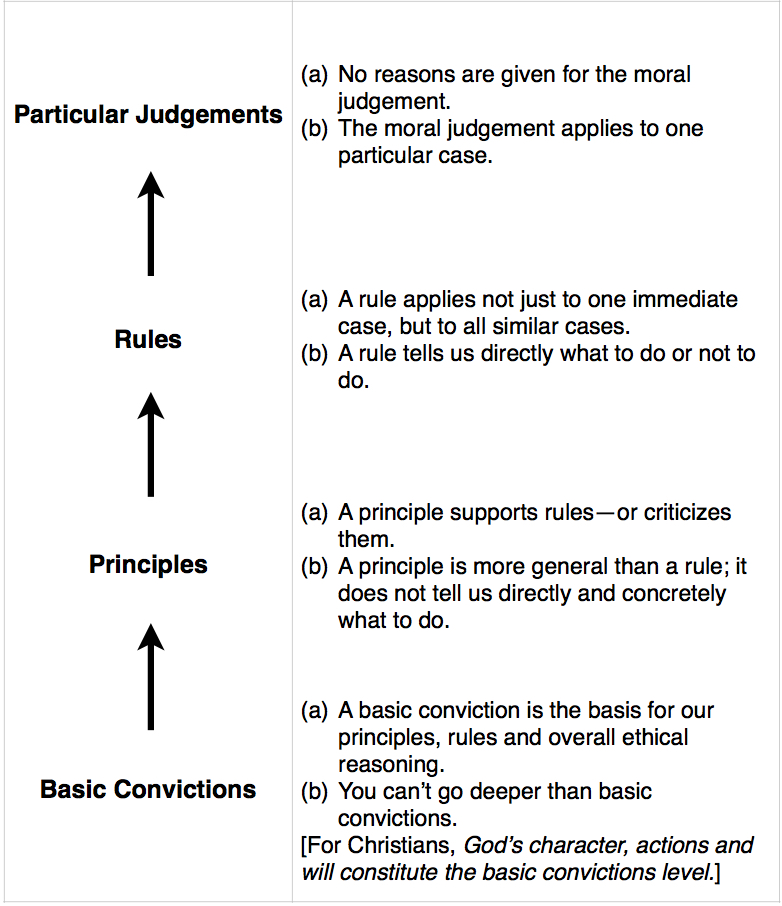
On Homiletics, Prophetic Words, & the American Church

A while ago I preached a sermon. I’m not really a preacher, which is a caveat intended to keep expectations low. I haven’t honed my homiletical craft by any stretch of the imagination. Mostly, I worry about content when I stand before a congregation and hope that compensates for other deficiencies.

This sermon was a little different, though. It was different in that I attempted to do something rhetorically that I hadn’t done before. Perhaps consequently, it also provoked a different reaction than I’ve experienced before. Specifically, I was asked to preach from Isaiah, and I therefore decided to explore a prophetic tone, understanding full well that the message itself would be sufficiently difficult to hear without any rhetorical flare. Indeed, as the introduction to the sermon indicates, I set reasonable expectations about the audience’s reaction. But my belief is that the message we might hear from Isaiah actually comes to the church as forcefully as ever, and I’m not about to soften the blow when the impact is exactly what the prophet intends.

In any event, the responses to the sermon have caused a good deal of reflection, and now that a bit of time has passed, I’m going to blog some of my thoughts.

Here’s the sermon. Since it’s just audio, it will help to say that I’m wearing jeans and a t-shirt.
And here’s the slideshow, for the charts.

Five Reflections on My Sermon and the Reactions Thereto

1. Genre and rhetoric

One of the reactions came in the form of a loving, though somewhat patronizing, conversation in which a kind sister let me know she recognized from her experiences raising boys that I was angry. She didn’t know why I was angry with the congregation, but she loved me anyway and just wanted me to know it. This one deserves first mention, because it is one of the very few negative reactions that came to me directly. I deeply appreciate the courage of confrontation and the intention to communicate love despite disagreement. But this is also symptomatic of the church’s hearing loss. When did we become so captive to the cult of positivity that we lost the ability to recognize a prophetic tone, much less appreciate it?

This loving critique missed the point on two levels. The first is that my emotions aren’t what’s at stake; the tone of the text is. Indeed, one of our difficulties teaching the church hermeneutically about biblical genre is that we preach in monotone. I was attempting (and, I admit, probably failing) to do justice to the sense of the message by taking a certain tone. That tone was not in this instance anger but discontent, though anger absolutely has its place in the pulpit too. The second level of misunderstanding, thus, is the implicit belief that anger (or any “negative” emotion) would have been inappropriate. The rhetoric we employ from the pulpit ought, in fact, to echo the genre and style of Scripture’s composition, at least some of the time.

Yet, good cheer has become a kind of moral imperative. Preachers are expected to be exclusively positive and “encouraging” (on the audience’s terms). The pastoral role has disastrously become opposed to the prophetic role. Our understanding of gentleness has become sappy. At the first sign of conflict the messenger recants and says, “Blessed are the peacemakers,” with an air of beneficent spirituality. And to this, the prophet says:

They have treated the wound of my people carelessly, saying, “Peace, peace,” when there is no peace. (Jer 6:14)

We need to hear the anguish and outrage of the prophets, most of all Jesus. We need their urgency and bluntness alongside their solidarity and compassion. If the church’s ears have been trained to screen out certain tones and emotions, then here we have a barrier to hearing the prophetic voice that we so badly need to hear. Let’s confront the problem head-on.

2. Taking it personally

Some listeners thought I was attacking the congregation. Despite my rather sweeping statements about American Christianity in general, it seemed that I was castigating the specific people that my church home comprises. A number of people said I just don’t know Cedar Lane (the congregation where I preached). The problem is that I’m an outsider, not just that I have no right to take that tone but that I’m mistaken in the first place.

In the wake of this reaction, I had to ask myself, Do I want you to take it personally or not? I was, after all, preaching to a particular congregation with the hope that it might have an effect in this particular place. There is undeniably some judgement in the decision to say this message is relevant here. But that’s always the case, whether the message is about a moral issue or a doctrinal one: don’t do this, think like that, and so on. The rub is not really that I was judgmental but that the judgement was about the community as a whole and not subject to a personal veto. No one is allowed to say privately, “He’s not talking to me,” because it’s about all of us. So, no, I don’t really want anyone to take it personally, because it’s not about what any one person is or isn’t doing. Nor is it about whether the congregation is “doing enough” or making its “best effort” or whatever it is that makes us feel like we shouldn’t be under the text’s judgement. The point was whether or not the church—any congregation of the church, even this one—will embrace God’s holy discontent. Any response that says in so many words, “Hold on, we do a lot of good things around here,” simply misses the point. God is still doing a new thing.

Actually, I so want to make this clear that I’m going to belabor it a bit. A few days before I preached this sermon I was in a conversation with someone who was considering whether they ought to look for a church in the community that is more outwardly oriented than Cedar Lane. My response was that they were underestimating the amount of outreach Cedar Lane does. I willingly defend the leadership of Steven Hovater, who preaches weekly at Cedar Lane with more skill and sensitivity than I could muster. I admire my brothers and sisters who serve in many ways, seen and unseen. But the direction Steven (or any other leader) sets or the good the church body does is quite beside the point. We’re all doing our best; it’s never good enough; God is gracious, and we’re in process. Fine. But whatever the case, God is doing a new thing. Our current way of life is not enough. Isaiah expresses God’s holy discontent. All of this is true no matter what else we want to say about any particular congregation. We are in the midst of an epochal shift, and the question is whether we can hear that truth and participate in the new thing that is different from other good things. It’s not supposed to be personal, but it is relevant to all of us.

3. Missing the point (or predictable deafness)

As for the primary message, there are also those who responded not to the style or the implicit judgement but the main idea. Despite my stating explicitly that I wasn’t preaching doom, I was told I preached too much doom and gloom. Despite spelling out that the decline of institutional Christianity is good news if God is leading the church into a new mode of existence, many people insist that it is bad news. Despite my claim that God is doing a new thing with the church for the good of creation, I was told I’m a pessimist. This is no different than preaching self-denial as good news, humility as glory, or suffering as joy. To some it is nonsense. I can only say: predictable and predicted. I can make no response to the denial, because it is a matter of perception, not argumentation. We can only pray that God heal our eyes and ears—and I sincerely include myself among the sick.

4. The measure of good

After preaching, the question everyone tries to answer is, Did I do a good job? In fact, “good job” is the standard positive response. This is tricky, though, because so many different questions are actually being answered with that phrase. Was the sermon well-crafted and well-executed? Did the sermon have the intended effect? Did people like it? And so on. But what is the measure of good?

Six years in Peru have led me to a few conclusions about serving God. The most important of these helps me answer the question for myself: faithfulness is more important than success. Particularly when I’m preaching with the assumption that many cannot hear the message, when the expected reaction is dislike, it is important to remember this. No matter how skillfully you communicate, when the message is hard, you’re not likely to hear “good job” afterward.

My wife will say that I have an advantage here: I don’t care what other people think. While that’s not strictly true, my rather strenuous self-critique does tend to diminish the weight of others’ opinions, whether positive or negative. For someone like me, the question is not usually whether others say I did a good job but whether I think I did. And the answer is probably going to be no. But faithfulness is more important than success. Could the delivery have been better? By miles. Did it have the intended effect? Not likely. Did people like it? Heheh. But I was faithful to the message. I think this is especially important to say in a church culture where people disliking a sermon can be construed as a failure because church leaders often experience upset members as a problem. In fact, in many churches there seems to be nothing worse than “offending” someone, which inevitably silences most of the prophets and a good deal of the Gospels. So I want to state here unequivocally: the avoidance of offense is not the measure of good. Faithfulness is. I do not hope to offend, but it’s a secondary concern.

5. The unheard positive

Since this is the first time I’ve preached a message that some disliked (as far as I know), it’s the first time I’ve noticed an interesting dynamic. In Churches of Christ, no one goes to the elders to say that a sermon was right and demand that the message be reiterated. They only go to complain and demand that the message be opposed. But the positive reaction does exist; it’s just that the elders never hear it. They hear only the negative.

I don’t actually know what the elders at Cedar Lane heard. I’m just making an educated guess that I caused them some concern and extra work. Yet, the sermon also provoked the most sincere positive responses I’ve ever received. The most poignant was a written message, which included this paragraph:

Your lesson today provided another spark of hope that all is not lost for the church. I didn’t have much confidence in the ability of CoC leaders to open their hearts and minds to the idea of the same “Old” God moving his people in a “New” way. Frankly, I still don’t expect any miracles, but the fact that you were allowed to present such “heresy” speaks volumes to my judgmental expectations. It also gave me the opportunity through some hallway conversations to find out that I am far from alone in welcoming a fresh movement of the Spirit.

My point is broader than the specifics of this case. Reflecting on the prophetic word in the American church, I truly wish church leadership could hear the positive response to hard messages as much as they inevitably hear the negative response. Going forward, given that I believe the whole church will be coming to terms with the new thing God is doing, it will be important for church members to move from privately encouraging the preacher to informing the elders.

Response to “Hermeneutics and Conflict”

Adam Hill wrote a piece called “Hermeneutics and Conflict” that came out in Wineskins yesterday. Any time I see hermeneutics getting press among Churches of Christ, I get excited—especially when we call it what it is instead of trying to work around the technical[1. By technical I make reference to a notion of technique:

tech·ni·cal /ˈteknək(ə)l/ adjective : of or relating to a particular subject, art, or craft, or its techniques.
tech·nique /tekˈnēk/ noun : a way of carrying out a particular task, especially the execution or performance of an artistic work or a scientific procedure.

These definitions lend themselves to the idea that biblical interpretation is a mixture of art and science, and the theory of interpretation—hermeneutics—is therefore a technical discipline in this sense. It is not merely technical in “academic” terms, which pejoratively (and wrongly) might connote needless technicality, but in terms of both performance and procedure skillfully and wisely undertaken.] jargon. We are facing a technical problem, among others, and I think we’re benefited by coming to terms with it as such.

I agree with the gist of Hill’s article, but I would push back at a few points as well. Hopefully, these thoughts contribute to the conversation in which he and I both hope to engage.

Points of Agreement

First, the big discussion we need in Churches of Christ is hermeneutical at root. We don’t need to focus on “issues.” The issues, which are diverse, need to become the opportunity for explicitly examining how we interpret and practicing new approaches to the text.

Second, the process of adopting a new hermeneutic is both slow and messy. It will require communal perseverance and mutual support, and many will balk at its difficulty.

Points of Divergence

First, in our tradition, the problem was always hermeneutics; as Hill’s reference to Behold the Pattern indicates, Churches of Christ have debated how the text means at more than one moment in our history, because we are a people constitutionally concerned with hermeneutics. Granting Hill is right that the debate is increasingly bent toward explicit hermeneutics at this juncture, I have to observe that this is not novel in itself. Rather, the novelty is the emergence of a real alternative. Previously, there was no real contender. A few key examples help portray the situation:

  • Liberalism was a move away from bothering too much with the text, but that didn’t amount to a new hermeneutic so much as an attempt to remove serious textual hermeneutics from consideration.
  • The anti-legalism that has grown in fits and starts over the last eighty years was a change of disposition resulting in a radical critique of the CEI hermeneutic, but it didn’t offer a substantial alternative, which has ultimately carried many congregations into an unconsciously subjectivist reading of Scripture.
  • The deeply exegetical orientation that our university Bible programs have produced in trained ministers is a gain that trades successfully upon our commitment to first-century Christianity without providing a way to bridge the twenty-century gap, thereby leaving CEI intact to serve that purpose even if the exegesis itself produces insights at odds with legal patternism.

In our postmodern moment, however, a real alternative seems to be taking shape—one that makes as much sense to a broad range of people as CEI did in the wake of the Enlightenment.

Second, I don’t put as much stock in pulpit preaching as Hill seems to do. In general, I’ll heartily second any call for “much better preaching.” But in terms of facilitating the adoption of a new hermeneutic, what gets modeled from the pulpit is relatively inconsequential (though obviously not irrelevant). The answer to Hill’s question, “Do we have room for this sort of practice and discussion in our services?,” is No, and we won’t if we’re trying to make our Sunday assemblies, and in particular our sermons, bear that kind of weight. This is because the sermon is neither the place for conversation nor the place for communal discernment, both of which are essential for the explicit formation of the community in the techniques of biblical interpretation; and it is because our times of communion and worship, not to mention the proclamation of the word, involve spiritual dynamics that deserve our full attention, upon which the hermeneutical discussion need not (and likely cannot successfully) impinge. It is only when we envision communal interpretive practices beyond our typical gatherings that we begin to imagine the magnitude of the difficulty we face. There is in view here a lifestyle change for congregations (much more than a homiletical change for preachers), the specifics of which are beyond the scope of this post.

Finally and most importantly, I have to disagree with the contrast between product and process. I fear it does injustice to the teleological sense of the narrative theology Hill advocates. The problem is basically that “struggle to really make headway with regard to our divisions” is the major concern instead of God’s mission. Our hermeneutic must be judged on the basis of whether it makes us a missional people—ultimately, whether it serves God’s ends in the world. Perhaps it helps to recast product as produce—fruit. I’m in favor of placing an emphasis on process, or on journey rather than destination, to change the metaphor. I think that’s healthy for lots of reasons I’m guessing Hill shares. But there is a purpose beyond the process, which we can judge to have been served. Unfortunately, a hermeneutic evaluated on the basis of “how well and how frequently and consistently it delivers the reader to surrender to God, reliance upon God, and bold trust in God” limits the effects of reading to the internal formation of the reader. Those are important, but we must consider the purposes of God beyond the reader (or better, beyond the reading community). For what are we formed? The answer to this question, in practice, is the fruit our hermeneutics must bear.

Hill and I agree more than we disagree, perhaps far more than his single post would indicate, and I only wish to carry the conversation a step farther. I’m grateful for his provocative and personal contribution.

Endnotes: