Recent months have occasioned a variety of preaching and teaching opportunities. In addition to my regular responsibilities at Stones River Church, I was invited to preach in the interim rotation at the Church of Christ at Cedar Lane (Tullahoma, TN), my wife’s childhood home church, which formerly oversaw our mission work in Peru. I’ll focus here, however, on ministry at SRC.
From Exodus to Hebrews
The winter and spring seasons at SRC were given to a series on the book of Exodus. Our shared pulpit model includes three preachers (Jon McPeters, John King, and me). We dedicated ourselves to exploring the meaning of Exodus for our church family. The book’s combination of narrative and law afforded an inspiring, bracing, sometimes perplexing meditation on the presence of God and the calling of God’s people.
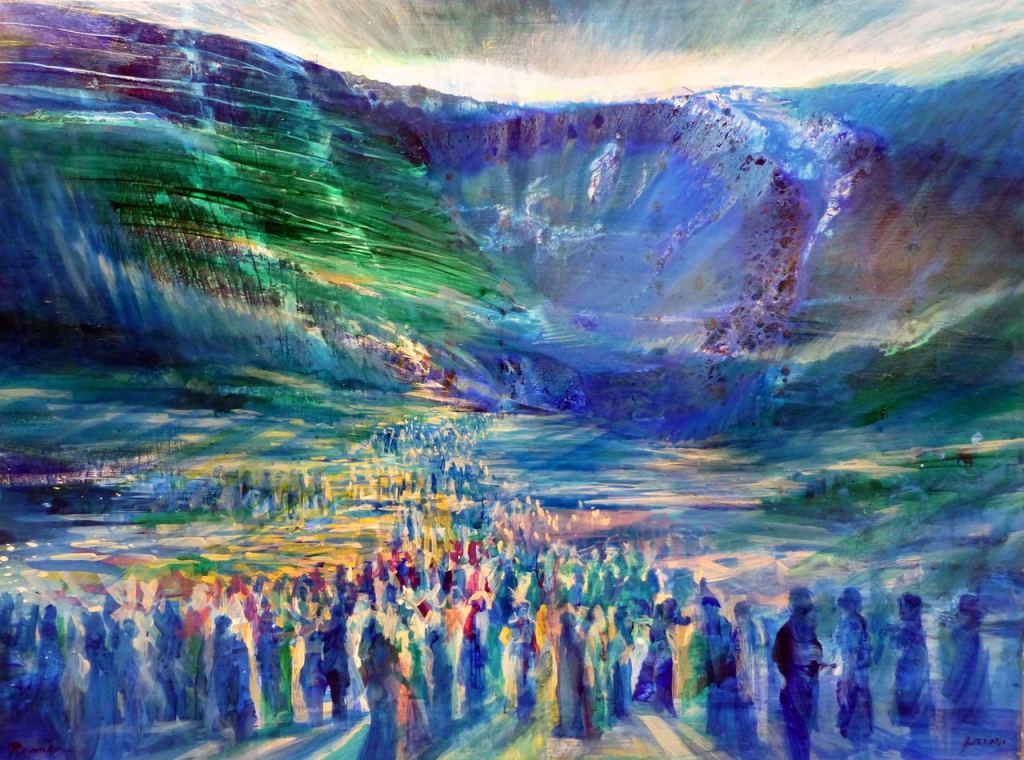
As summer began, we embarked on a study of the book of Hebrews. So far, it has been a fitting, if challenging, sequel to Exodus. Last Sunday, I preached on Hebrews 5:11–6:12, the author’s stern pastoral condemnation of immaturity. Sometimes, being told to grow up is necessary. It’s a message I am trying to take to heart.
Identity and Dialogue
Sunday morning class recently transitioned from our study of Mark’s Gospel to a multi-week discussion of our congregational identity. Long-term members shared memories of formative or paradigmatic experiences. We endeavored to highlight what has really characterized our family through the decades. It turns out that a significant amount of trauma haunts the church’s collective memory. This is common for churches with our background (if you know, you know), but I was intrigued by the extent to which a search for positive indentifiers gave rise to stories about conflict, pain, and disappointment.
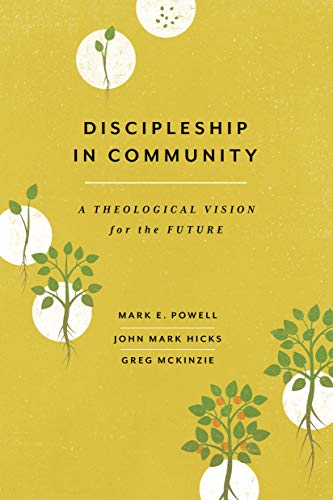
Along with the personal history of the church, questions arose regarding our connection to the tradition known as Churches of Christ. SRC is affiliated historically and officially (per our founding documents) with Churches of Christ, though we’re admittedly something of a black sheep in Murfreesboro. Over the years, the embrace of a more Spirit-centered attitude, the use of musical instruments in worship, and openness to female leadership in congregational life has resulted in condemnation and rejection from other Churches of Christ, and the pain of these public anathemas and privately fractured relationships has produced in some members a deep ambivalence about identifying with the tradition. I made a plea, nonetheless, to consider the inevitability of our theological DNA and to appreciate the best of the tradition. An overview of Discipleship in Community was useful for framing my perspective. It was fun to test drive the book in this way.
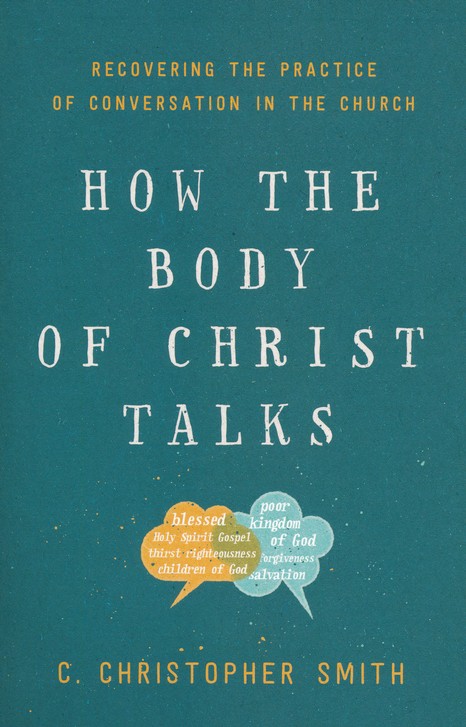
The question of who are are and who we are becoming will generate an ongoing conversation. But the identity discussion was only an interrim class as we prepared for our next major study. Through a survey of interests and preferences, we landed on the need to discuss how to have hard discussions. We hope this study, based on Christopher Smith’s book How the Body of Christ Talks, will equip us for discussing other, potentially volatile topics identified in the survey in a healthy, Christlike way. We are a couple of chapters in, and I’m really excited about the potential for growth this study promises.
Spiritual Disciplines
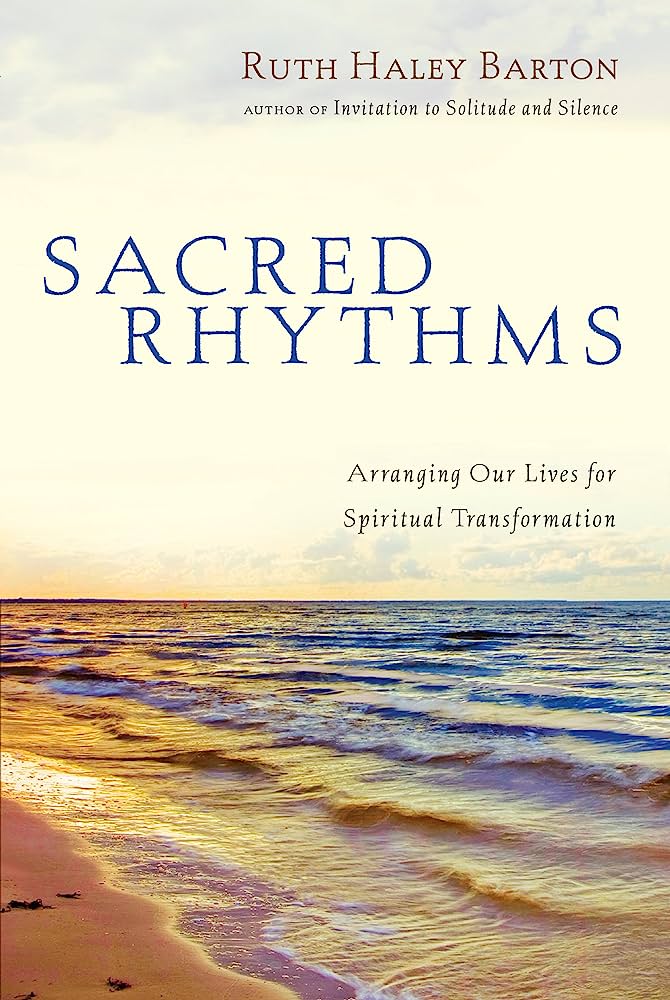
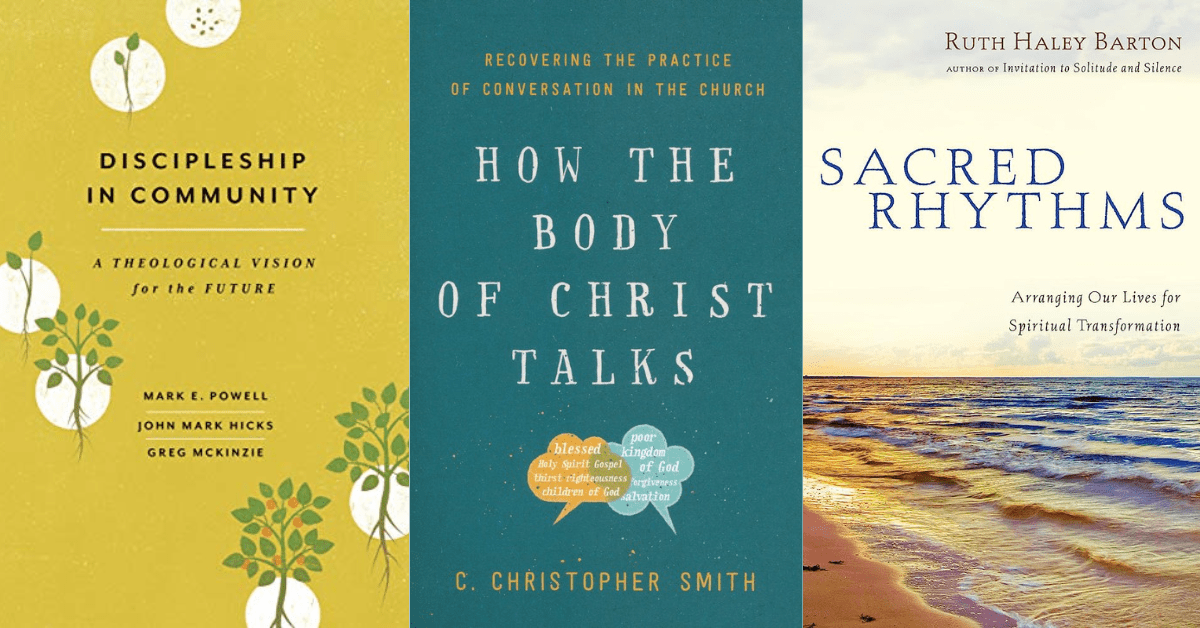
Our Wednesday night gathering has been focused on Ruth Hailey Barton’s book on spiritual disciplines, Sacred Rhythms. We divvied up the chapters and have taken three or four weeks on each one, allowing time to practice these disciplines collectively and process the experiences. So I’ve been mostly a participant, which was a nice respite, though I’ve been leading us through the chapter on discernment for the last few weeks. I’ll save my reflections on discernment for another post and just say here that I’m grateful to be part of a community that seeks a spiritual life together. Resisting the individualism that infects American Christianity like a cancer requires intentionality and commitment.
 Scripture & Mission